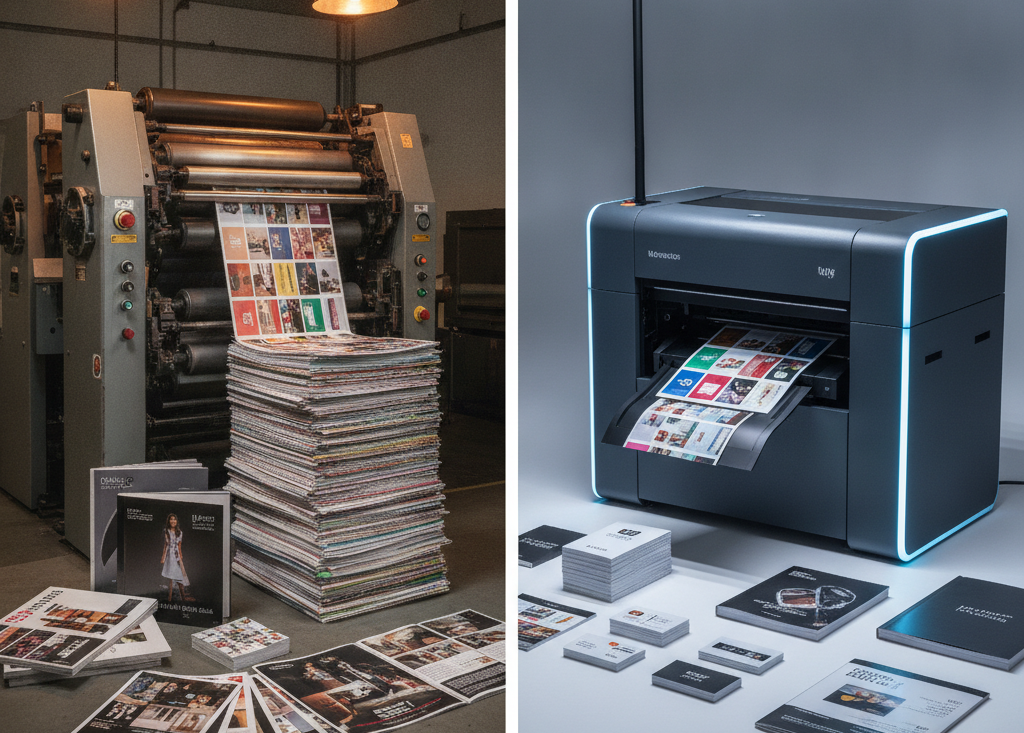
Offset printing has been the backbone of commercial print production for decades — and in 2026, it still holds a powerful advantage for the right kind of job. But it is not always the best choice. If you are a small business owner, entrepreneur, or organization across the GTA trying to figure out whether to go offset or digital for your next marketing run, branded materials, or business essentials, you are not alone in finding the decision confusing. At Print Grafix, our team fields this question almost every day from clients in Scarborough and across the Greater Toronto Area — and the honest answer is: it depends on what you are printing, how many copies you need, and how fast you need them.
This guide breaks down the real differences between the two methods in plain language, so you can walk into any conversation with a printing company feeling informed and confident about what you are ordering.
⚡ QUICK ANSWER
Digital printing is best for short runs (typically under 500 units), fast turnarounds, and jobs with variable data or multiple design versions. Offset printing becomes more cost-effective at high volumes (usually 500+ copies) and delivers superior colour accuracy on specific paper stocks. For most small businesses in the GTA ordering flyers, brochures, business cards, or banners, digital printing offers the fastest and most affordable path — but for large-volume commercial campaigns, offset is worth the setup investment.
What Is the Actual Difference Between Offset and Digital Printing?
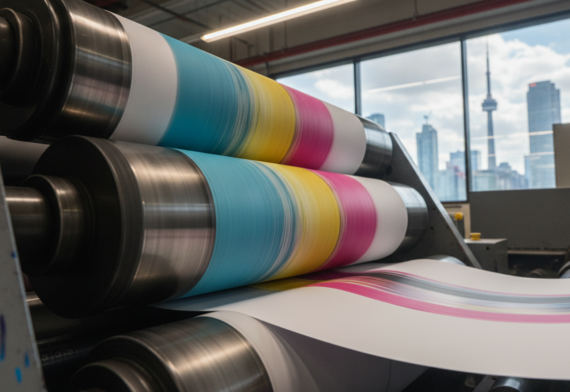
Offset printing transfers ink from a plate to a rubber blanket, which then rolls the image onto paper — while digital printing sends files directly from a computer to the press with no plates required. That single distinction drives almost every difference in cost, speed, quality, and flexibility between the two methods.
In offset printing, each colour in your design requires its own printing plate, typically made from aluminium. Those plates are created during a “makeready” phase before a single sheet is printed. This upfront setup takes time and costs money — which is why the economics only start making sense when you are spreading that cost across hundreds or thousands of impressions.
Digital printing, by contrast, has no plates and no makeready. Your artwork goes directly to the press. This means you can print one copy or one hundred copies for nearly the same per-unit setup cost. It also means you can change the design between sheets — which is why digital is the technology behind variable data printing, like personalized mailers or numbered event tickets.
Both methods produce professional, high-quality results. The differences in output quality between offset and modern commercial digital print have narrowed considerably — today’s high-end digital presses produce output that rivals offset in most real-world applications. The choice is rarely about quality alone.
How Does Print Volume Affect Which Method You Should Choose?
Volume is the single most important factor in choosing between offset and digital — and there is a clear crossover point where one becomes more economical than the other. For most standard print products, digital printing is more cost-effective below roughly 500 units, while offset printing becomes the smarter investment above that threshold.
Here is why: offset printing carries a fixed setup cost regardless of the quantity. Once those plates are made, each additional copy costs very little to produce. At high volumes, the per-unit cost drops dramatically. Digital printing has a lower entry cost but a flatter cost curve — the per-unit price does not decrease as steeply as volume grows.
For small businesses and entrepreneurs across the GTA — which is exactly who we work with every day at our Scarborough studio — most print orders fall well within the digital range. A local restaurant ordering 200 menus, a startup needing 300 brochures for a trade show, or a nonprofit printing 150 event programs: all of these are ideal digital print jobs. Ordering 5,000 direct mail flyers for a city-wide campaign? That is where offset printing earns its place.
| Factor | Digital Printing | Offset Printing |
|---|---|---|
| Best Volume Range | 1 – ~500 units | 500+ units |
| Setup Cost | Low / none | Higher (plates required) |
| Per-Unit Cost at High Volume | Moderate | Very low |
| Turnaround Speed | Fast (same day to 2 days) | Slower (days to weeks) |
| Variable Data / Personalization | Yes — easy | No — plates are fixed |
| Colour Accuracy (Pantone / Spot) | Good (CMYK simulation) | Excellent (exact spot inks) |
| Paper Stock Versatility | Good | Excellent |
| Minimum Order | As low as 1 unit | Typically 500+ recommended |
Why Do Turnaround Times Matter — and Which Method Is Faster?
Digital printing is almost always faster than offset printing, and for most GTA businesses with real deadlines, that speed advantage matters more than people initially expect. Because digital presses require no plates and no makeready time, a well-prepared print file can move from approval to finished product in hours rather than days.
We hear this constantly from clients who come to us in Scarborough after a last-minute need surfaces — a conference gets moved up, a pop-up shop opportunity appears, a marketing window opens unexpectedly. In these situations, offset printing simply cannot compete on speed. The plate-making process alone can add one to three business days before a single sheet is printed.
At Print Grafix, fast turnaround is one of the pillars of what we offer. Our team understands that small businesses and entrepreneurs cannot always plan weeks ahead — and competitive pricing with quick delivery is a genuine part of our service, not a marketing claim. For many print jobs, particularly flyers, business cards, brochures, and banners, we can have your order ready in a fraction of the time an offset run would require.
“Speed is not just a convenience — for small businesses, it is often the difference between capitalizing on an opportunity and missing it entirely. Digital printing removes the bottleneck.”
That said, if your timeline allows for planning and your volume justifies it, the wait for an offset run can be entirely worthwhile — especially for large-scale commercial campaigns where cost per unit and colour precision are the driving priorities.
Is Colour Quality Really Better with Offset Printing?
Offset printing does hold an edge in colour precision for specific use cases — particularly when your brand requires exact Pantone or spot colour matching — but for the vast majority of print jobs, modern commercial digital print quality is exceptional and completely professional. The gap between the two has narrowed significantly as digital press technology has advanced.
Offset printing lays down ink directly from physical plates, which allows for extremely consistent colour reproduction across massive print runs. If you are printing 10,000 copies of a branded brochure and every single one needs to match a specific Pantone swatch with zero variation, offset is the gold standard. It also handles certain specialty paper stocks and finishes — like uncoated textured papers — more reliably than some digital presses.
Digital printing uses CMYK toner or ink to simulate colours, which works beautifully for most designs. The honest reality is that for business cards, flyers, brochures, posters, banners, and the wide range of marketing and advertising prints that local businesses across the GTA order regularly, digital output looks sharp, vibrant, and completely polished. Most clients — and most of their customers — cannot tell the difference in everyday materials.
Where colour precision truly matters at a technical level — pharmaceutical packaging, premium brand identity materials, luxury retail collateral — the offset advantage becomes meaningful. For Scarborough’s small business community ordering flyers for a seasonal promotion or brochures for a trade show, digital colour quality is more than sufficient.
Which Print Products Are Best Suited to Each Method?
Different print products naturally align with different production methods — and knowing which category your project falls into helps you make the right call from the start. As a full-service printing company serving clients across Scarborough, Richmond Hill, and the broader GTA, we work with both methods and recommend based on what genuinely serves your project best.
Print Products That Excel in Digital Production
Business card printing is one of the most common digital print jobs we handle — short runs, sharp detail, fast turnaround. Most entrepreneurs and small businesses need a few hundred cards at a time, and digital delivers a finished, professional product quickly and affordably. Flyer printing and brochure printing follow the same logic: smaller quantities, frequent design updates, and deadline-driven timelines make digital the clear winner.
Banner printing also benefits from digital production, particularly large-format digital presses that can handle wide-format output for retail signage, event displays, and outdoor advertising. Our signage and large-format printing services use digital technology to produce vivid, weather-resistant banners and displays at sizes that offset presses are not designed for.
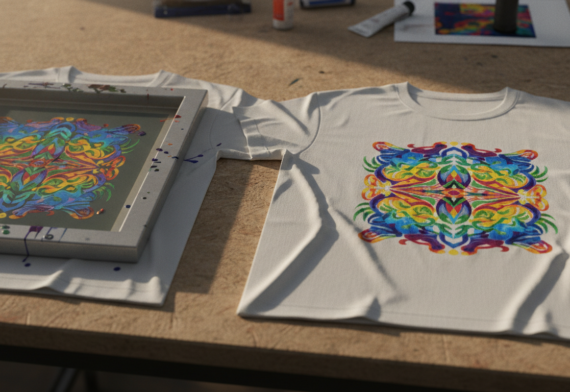
Branded apparel and gifts printing — whether heat-transfer labels, hang tags, or accompanying printed materials — also tends to run through digital workflows for the flexibility and low minimums. If you are a local Scarborough boutique or a GTA-based corporate gift supplier, digital print gives you the agility to order what you need without warehouse-scale commitments.
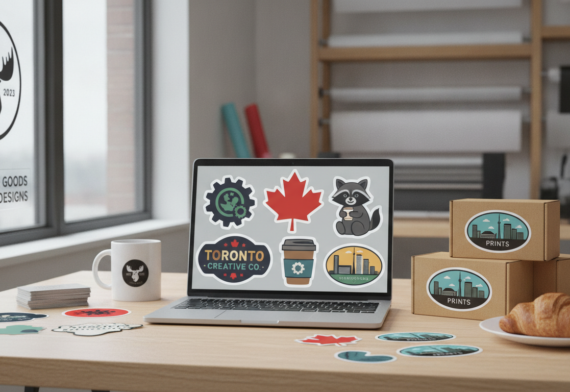
Labels, stickers, and printed decals are another strong fit for digital production. Whether you are searching for stickers printing in Toronto, label printing in Richmond Hill, or printed decals near your location, digital label presses allow for short runs with full-colour output and even custom shapes through die-cutting. Businesses looking for logo printing in Richmond Hill or lamination services to protect their labels will find digital print shops better equipped for small-to-medium label orders than traditional offset plants.
Print Products That Favour Offset Production
Large-volume direct mail campaigns — think 5,000 to 50,000 pieces — are the classic offset use case. When you are mailing a promotional flyer to an entire postal route or distributing a catalogue across multiple locations, offset economics make a compelling case. High-run magazine inserts, product catalogues, and annual reports with precise brand colour requirements also typically benefit from offset production.
Packaging for retail products — boxes, folded cartons, labels at very high quantities — often uses offset printing for cost efficiency at scale, with finishing processes applied afterward. If your business has reached a stage where you are printing tens of thousands of units of a single design that will not change for months, offset delivers an unbeatable cost-per-unit advantage.
If you are exploring custom printing in Toronto or custom printing options across the GTA and are unsure which method fits your specific project, our team is always available for a straightforward conversation. There is no one-size-fits-all answer, and we would rather help you choose correctly from the start than have you invest in the wrong process.
From our studio in Scarborough, we serve clients across Toronto, Richmond Hill, Markham, and the entire GTA who need printing services in Toronto that combine honest advice with reliable execution. Whether you ultimately need a digital run for speed and flexibility or are planning a larger offset campaign, the goal is always the same: print that works for your business.
You can learn more about who we are and how we work by visiting our About Us page — we believe transparency about our process is part of what makes working with a local studio different from placing an order with an impersonal online printer.
Ready to Print? Let’s Talk.
Whether you need a fast digital run for business cards, flyers, or brochures — or you are planning a larger commercial print campaign — our team at Print Grafix in Scarborough is here to help you get it right. No enterprise contracts. No guesswork. Just straightforward, high-quality printing with fast turnaround and competitive pricing.
✍️ Written by the Print Grafix Team — Based in Scarborough, ON, Print Grafix is a local GTA printing studio offering everything from business cards and flyers to large-format signage and branded apparel. We are passionate about helping small businesses, entrepreneurs, and organizations across the Greater Toronto Area get professional print results without the complexity or cost of enterprise print contracts.
Frequently Asked Questions
How do I know if my print job should be digital or offset?
Start with two questions: How many copies do you need, and how fast do you need them? If your order is under 500 units or you need a quick turnaround, digital printing is almost certainly the right choice. If you are printing 1,000 or more copies of the same design, have time to plan, and need precise colour matching across every piece, offset printing may deliver a better cost-per-unit value. When in doubt, ask your printing company to quote both options and compare.
What types of businesses typically benefit most from digital printing?
Small businesses, startups, nonprofits, restaurants, retail boutiques, and service providers across the GTA benefit most from digital printing because their print needs tend to be smaller in volume, varied in design, and time-sensitive. Digital printing services in Toronto allow these businesses to order only what they need, update their designs frequently, and receive their materials quickly — without minimum order requirements that would force them to overstock.
Why does offset printing cost more upfront but less per unit at high volumes?
Offset printing requires physical printing plates to be manufactured before production begins — this is the source of its higher setup cost. Once those plates exist, however, running additional copies requires only ink and paper, making each additional unit very inexpensive. The upfront plate cost is essentially divided across every copy you print, so the more you print, the smaller that cost becomes per unit. At low quantities, you are paying a large fixed cost over very few copies, which makes offset uneconomical for short runs.
Can I get same-day or rush printing for my business materials in the GTA?
Rush and fast-turnaround printing is available through digital production for many standard print products including business cards, flyers, brochures, and certain banner formats. At Www.Printgrafix.Ca, our team in Scarborough works with clients across the GTA who have tight deadlines, and we do our best to accommodate urgent requests. The key to a fast turnaround is having your artwork file print-ready when you submit your order — this removes design revision time and allows us to move your job directly to production.