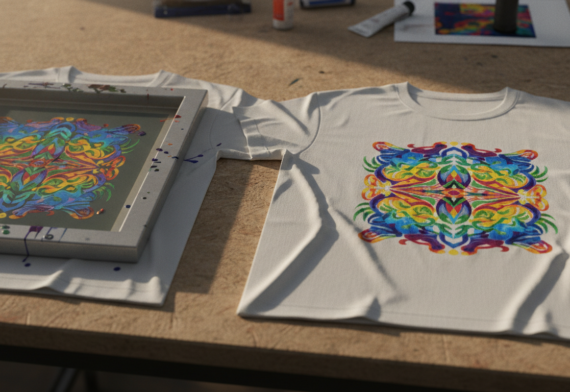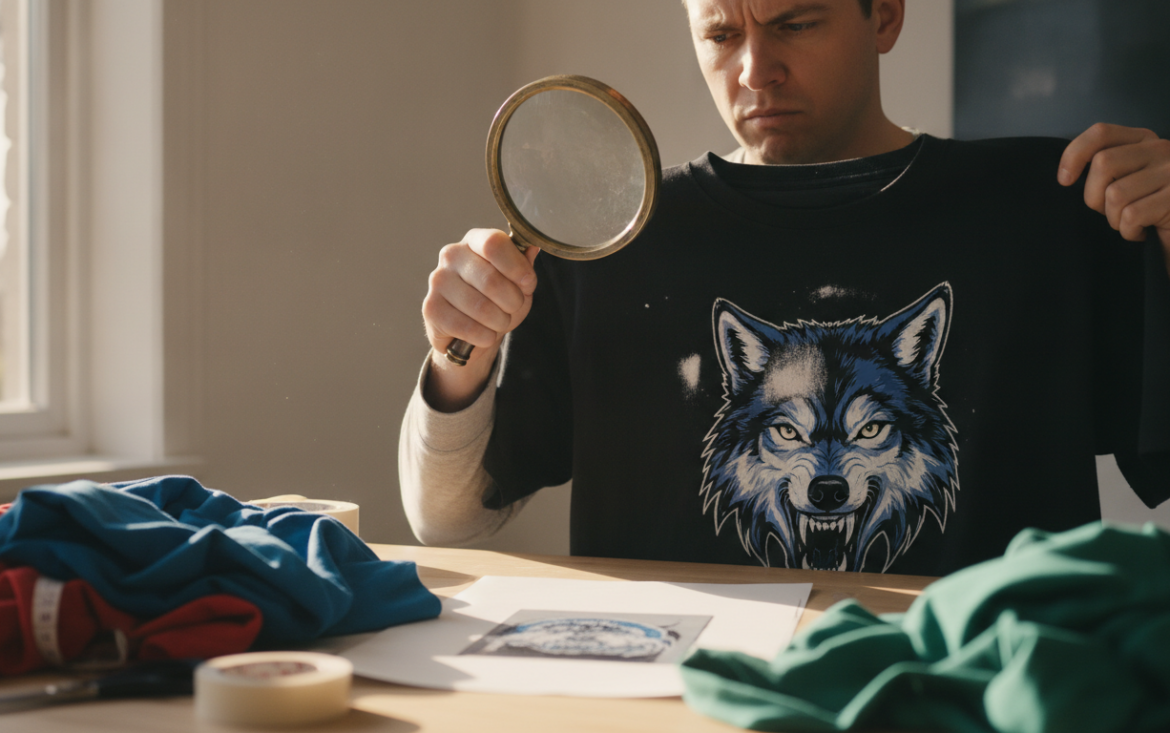
Personalized t shirts printing sounds straightforward until you receive your order and realize the font shifted, the colours faded after one wash, or the name was spelled exactly the way you typed it in an email at midnight. These are not rare complaints. They are the predictable result of skipping a few critical steps before the job goes to print. At Print Grafix, we work with small businesses, sports teams, schools, and community organizations across Scarborough and the broader GTA every week, and the questions we hear most often are not about price or turnaround. They are about how to make sure the final shirt looks the way the customer imagined it.
Quick Answer
To get personalized shirt printing right the first time, submit vector artwork or high-resolution files (minimum 300 DPI at print size), confirm colour values in CMYK or the specific Pantone code, and always request a digital proof before production begins. For name and number printing, provide a confirmed roster in writing so there is a clear record on both sides.
What Makes Personalized Shirt Printing Different from a Standard Print Run?
Personalized shirt printing involves variable data — meaning each garment carries unique information such as a name, a number, a photo, or a custom message — which is fundamentally different from printing the same graphic on fifty identical shirts. That distinction matters because a single data error on a personalized order affects a specific person, not just a generic piece of inventory.
With a standard run of branded apparel, one approved design goes to print and every unit is identical. With personalized orders, the production workflow must account for individual variations at every step: file preparation, print sequencing, quality checks, and packaging. A team uniform order with forty different names and numbers, for example, requires a structured data file, clear font specifications, and a proofing process for the template even if individual names are not each separately proofed.
Understanding this distinction helps you set realistic expectations and ask the right questions when you place your order. It also explains why the preparation phase matters far more for personalized work than it does for repeat print runs.
Common Personalization Types and How They Affect Production
Not all personalization is the same. Name and number printing for a sports league has different technical requirements than a photo tee for a family reunion or a one-off custom design for a small business gift. Here is a quick comparison of the most common personalization types handled in custom t shirt printing, and what each demands from both the customer and the printer.
| Personalization Type | Common Use Case | File Requirement | Key Watch-Out |
|---|---|---|---|
| Name and Number | Sports teams, leagues, school events | Roster list (CSV or spreadsheet), confirmed font and size | Spelling errors in submitted roster cannot be corrected after printing |
| One-Off Custom Design | Gifts, milestones, branded samples | Vector file (AI, EPS, or PDF) preferred; 300 DPI minimum for raster | Low-resolution artwork looks sharp on screen but soft or pixelated on fabric |
| Photo Tees | Family events, memorials, promotions | High-resolution photo (minimum 300 DPI at intended print dimensions) | Colour profiles differ between screen (RGB) and print (CMYK); conversions affect tone |
| Text-Based Personalization | Staff uniforms, company events, clubs | Font files or outlined text in a vector format | System fonts can substitute unexpectedly if not outlined before submission |
How Do You Submit Artwork That Prints Correctly the First Time?
The single most reliable way to ensure your artwork prints correctly is to submit a vector file with all fonts outlined and all colours defined in the correct profile for your chosen printing method. That one sentence prevents the majority of reprints our team sees.
Vector files, typically created in Adobe Illustrator and saved as AI, EPS, or PDF, use mathematical paths rather than pixels. This means they scale to any size without losing sharpness — whether the design is going on a youth small or an adult 3XL. Raster files like JPEG or PNG are pixel-based, and when they are scaled up to fit a larger print area, the edges become blurry. If you are working from a raster file, ensure it is at least 300 DPI at the actual dimensions of the print area, not at thumbnail size.
Colour Profiles: Why Your Screen Lies to You
Screens display colour using RGB (Red, Green, Blue), a light-based system that can reproduce colours a printer physically cannot replicate on fabric or paper. When an RGB file is converted to CMYK (Cyan, Magenta, Yellow, Black) for print, vivid neon greens and electric blues often shift to muted, duller tones. This is not a printing error. It is a physical limitation of pigment-based colour reproduction.
To avoid surprises, convert your artwork to CMYK before submission and check the values in your design software. If you need to match a brand colour precisely — for a corporate logo on staff uniforms, for instance — provide the specific Pantone code. Pantone matching gives our team and your design a common reference point that does not depend on how your monitor is calibrated.
Always Request a Digital Proof
A digital proof is a rendered preview of your design as it will appear on the garment, showing placement, scale, and colour values. Reviewing a proof before production begins costs you a few minutes. Discovering a placement issue or a colour shift after printing costs you the entire order.
When reviewing your proof, check these items specifically: spelling of every name or word, colour accuracy against your brand standards, placement relative to seams and collar, and proportional scale of the design on the garment size. Approve the proof in writing, whether by email or through your order portal, so there is a clear record for both sides.
A digital proof is not a formality. It is the last checkpoint between your vision and a finished garment that cannot be un-printed. Treat it seriously and review it carefully.
Why Does Garment Choice Affect How Your Design Prints?
The fabric you choose directly affects how ink adheres, how colours appear, and how the finished print holds up over time. Not all shirts are equal surfaces for printing, and selecting the wrong blank garment for your printing method is one of the most overlooked causes of disappointing results.
Cotton-rich fabrics (100% cotton or at least 80% cotton) absorb ink well and produce sharper, more vibrant results with most printing methods. Polyester and performance fabrics behave differently. They are better suited to sublimation printing, where ink is heat-transferred into the fibres rather than applied on top, but they can cause adhesion issues with standard plastisol or water-based inks.
The colour of the base garment also matters. Printing a light-coloured or white design on a dark shirt requires either an underbase layer of white ink (which adds opacity) or a transfer method that includes a white backing. Without it, the design will appear translucent or simply not visible. This is a production step that affects both cost and turnaround, so it needs to be discussed before the order is placed.
For customers in Scarborough and across the GTA who are ordering custom t shirt printing for a team, an event, or a retail run, our team can advise on which blank garments work best for your specific design and usage requirements. Getting that consultation upfront prevents the most common garment-related reprints we see.
If you are curious about how different printing technologies interact with fabric, our detailed article on What Is DTF Printing? How Direct-to-Film Works and Why It’s Changing Custom Apparel covers one of the most versatile methods currently available for personalized apparel.
How to Handle Name and Number Orders Without Errors
Name and number orders are among the most rewarding to produce and among the easiest to get wrong. The fix is simple: confirm every detail in a structured written document before anything goes to press.
Submit your roster as a spreadsheet or CSV file with clearly labelled columns: player name, number, size, and any secondary information like a preferred font style if you are choosing between options. Avoid sending names in email body text or in a photo of a handwritten list. Both introduce transcription risk.
Double-check every name in your submitted file before you send it. This sounds obvious, but under time pressure — a common reality for coaches and event organizers — rosters are often sent before they have been confirmed with every participant. A name on the roster that is later corrected after printing is not something that can be fixed without reprinting that specific piece.
Number Placement and Font Selection
For sports uniforms, the standard placement for back numbers is centre-back below the collar, and front numbers are typically smaller and positioned on the left chest. If your league has specific bylaws about number size or placement, provide those in writing when you place your order. Assumed standards vary between sports and age groups, and what is standard in one league may not be in another.
Font selection for numbers matters more than most people expect. A condensed athletic font reads differently at a distance than a rounded casual font. If you need numbers to be legible during play or from the stands, choose a clean, bold typeface with strong contrast against the garment colour. Our team can share examples if you are not sure which direction to take.
Is It Worth Working with a Local Printer for Personalized Orders?
For personalized orders specifically, working with a local printer offers real advantages that online-only platforms cannot match. Direct communication with the people producing your order means that nuances get addressed before they become problems, not after they ship.
Online print platforms are efficient for repeat orders with locked-in specifications. But for one-off designs, photo tees, or roster-based name and number orders, the variables involved benefit from a conversation. When something in your artwork file looks off — a font that did not embed correctly, a photo that is lower resolution than ideal — a local team can flag it and reach you the same day rather than auto-processing the job and shipping you a disappointing result.
At Print Grafix, our approach is built around this kind of direct, personalized service. We work with clients from Scarborough and throughout the GTA who need fast turnaround without sacrificing accuracy. If you are weighing local versus online options more broadly, the article on Print-on-Demand Gifts vs. Local Custom Printing: Which Delivers Better Value? gives a thorough breakdown of when each approach makes sense.
Personalized shirt printing also benefits from physical proximity when sizing questions arise. Seeing a sample garment before committing an entire roster order to a specific blank style is a practical advantage that only a local studio can offer. For organizations across the GTA spending meaningful budgets on branded apparel, that ability to review and confirm before production begins is worth more than a marginal shipping discount from an online provider.
Beyond apparel, many of our clients who start with a personalized t-shirt order discover that we also handle a full range of printed materials — from business cards and flyers to banners and large format signage. Consolidating your printing with one trusted local vendor simplifies your workflow significantly, particularly when you are running a small business or coordinating a community event with multiple material needs at once.
Ready to Get Your Personalized Shirts Right the First Time?
Our team at Print Grafix works with small businesses, sports organizations, and community groups across Scarborough and the GTA to produce personalized apparel that matches the vision — not just the budget. From artwork review to final delivery, we handle the details so you do not have to discover problems after the fact.
Bring us your design, your roster, or just your idea. We will work through the specifics with you before anything goes to press.
About the Author: The Print Grafix Team
The Print Grafix team is a group of print and design professionals based in Scarborough, ON, serving small businesses, organizations, and entrepreneurs throughout the Greater Toronto Area. With a full-service offering that spans branded apparel, marketing materials, and large format printing, the team brings a hands-on, detail-oriented approach to every project they take on.
Frequently Asked Questions
How should I format my artwork file for personalized t-shirt printing?
Submit vector files (AI, EPS, or PDF) with all fonts outlined and colours set to CMYK for most printing methods. If you are submitting a raster file for a photo tee, ensure it is at least 300 DPI at the actual print dimensions. Avoid submitting files exported from presentation software or screenshots, as these are almost always too low in resolution for clean garment printing.
What information do I need to provide for a name and number order?
Provide a confirmed roster as a spreadsheet listing each player’s name exactly as it should appear, their number, their garment size, and any placement or font preferences. Submit this in writing before production begins, and double-check every entry in the file. Corrections after printing require a reprint of the affected pieces at additional cost.
Why do my shirt colours look different from what I saw on my screen?
Screens display colour in RGB, a light-based mode that can show colours that are impossible to reproduce with ink on fabric. When artwork is converted to CMYK for printing, saturated neons and vivid digital tones often shift. Converting your files to CMYK before submission and specifying Pantone codes for critical brand colours gives you the most predictable and accurate result at print.
Can I order a single one-off personalized shirt, or is there a minimum quantity?
Minimum quantities vary depending on the printing method used. Some methods, particularly direct-to-film (DTF) transfers and direct-to-garment printing, are well suited to small or single-unit orders because they do not require the setup costs associated with screen printing. Contact our team at Print Grafix to discuss your specific requirements and we can recommend the most cost-effective method for your order size.
Written by the Print Grafix Team
Our team brings deep expertise — We provide printing services.