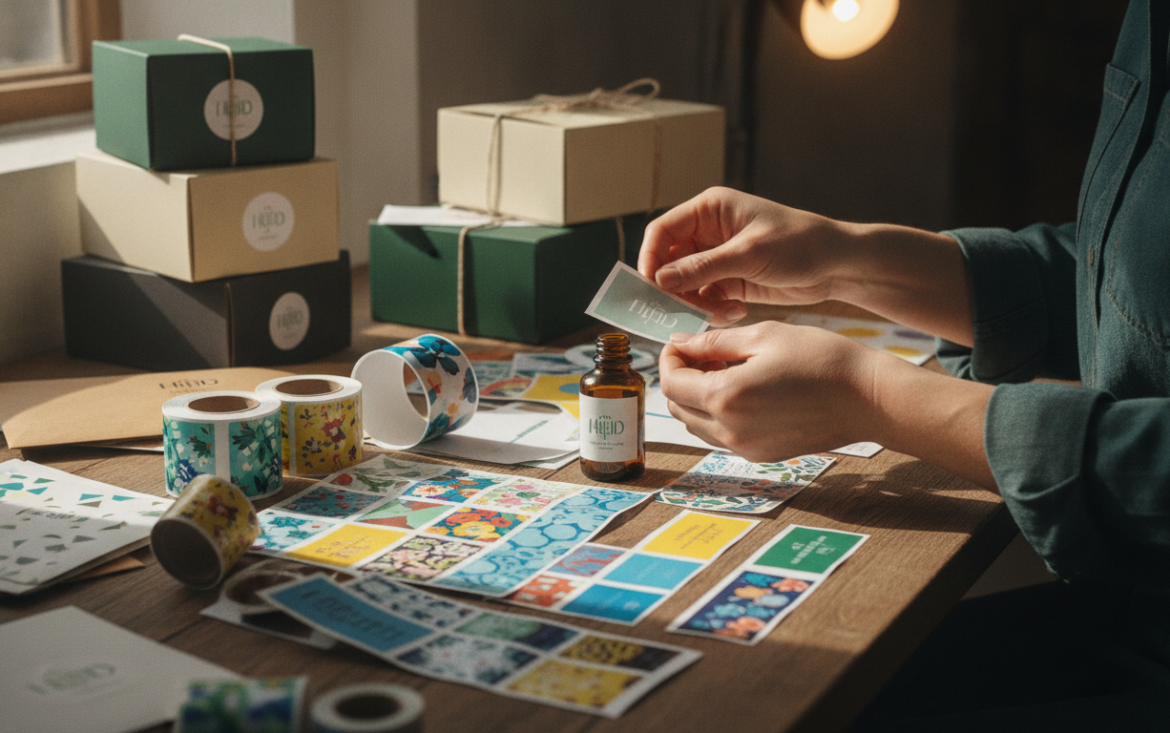
If you’ve ever peeled a flimsy label off a product because the edges curled, or handed out packaging that looked like it was printed at home, you already understand why label printing decisions matter more than most small business owners expect. Labels are often the first physical thing a customer touches before they ever experience your product or service. Getting them right — the material, the finish, the size, the quantity — makes a measurable difference in how your brand is perceived.
At Print Grafix, we work with small businesses, entrepreneurs, and organizations across the GTA every day on exactly these decisions. This guide walks you through everything you need to know before placing your order: materials, finishes, sizing, minimum quantities, and what to expect from the process when you work with a local print studio in Scarborough, ON.
Quick Answer
For most small businesses in the GTA, vinyl is the most durable and versatile label material, while matte or gloss lamination adds protection and a professional finish. Order with clear cut-to-size specs, provide print-ready files at 300 DPI, and confirm turnaround time upfront — many local print shops including Print Grafix offer fast production runs with no enterprise minimums required.
What Types of Labels Can Small Businesses Order?
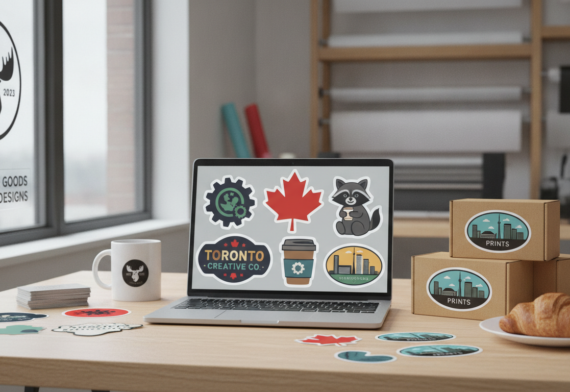
Labels fall into several broad categories, and knowing which type you need narrows down your material and finish choices significantly. Product labels go on physical goods — jars, bottles, boxes, bags, and packaging. Address labels are used for shipping and mailers. Sticker-labels are more versatile and cross the line between branding and practical use, appearing on everything from laptop surfaces to storefront windows to promotional giveaways.
Custom stickers that function as labels are especially popular among small businesses that sell handmade goods, food products, or locally sourced items. A well-designed sticker-label on a kraft bag communicates the same credibility as a full printed package, often at a fraction of the cost. If you’ve searched for printed decals near me or wondered about the difference between a decal and a label, the core distinction is application: decals are typically applied to hard surfaces like windows, vehicles, or equipment, while labels are designed primarily for packaging and product surfaces.
At Print Grafix, our label and sticker production covers all three categories. Whether you’re labelling product inventory, adding branded stickers to fulfillment packaging, or creating address labels for a large mail campaign, our team can guide you to the right specification for your use case.
What Materials Are Available for Label Printing?
The substrate — the physical material your label is printed on — determines how durable it is, how it looks on the final surface, and whether it can handle moisture, cold, or outdoor conditions. Choosing the wrong material for the application is one of the most common and costly mistakes small businesses make when ordering labels for the first time.
Here is a comparison of the most commonly ordered label materials and how they perform across key attributes:
| Material | Best For | Durability | Moisture Resistance | Look and Feel |
|---|---|---|---|---|
| White Vinyl | Product labels, outdoor use, equipment | High | Excellent | Clean, professional, vibrant colour |
| Clear Vinyl | Bottles, glass surfaces, “no-label” look | High | Excellent | Transparent background, modern appearance |
| White Paper | Indoor use, address labels, shipping | Moderate | Low | Familiar, easy to write on |
| Kraft Paper | Artisan products, food packaging, gifting | Moderate | Low | Natural, handmade aesthetic |
| Holographic / Foil | Premium branding, cosmetics, event use | Moderate to High | Moderate | Eye-catching, premium appearance |
Vinyl is the most requested material in our studio for good reason. It resists water, holds colour well under UV exposure, and conforms to curved surfaces without cracking or bubbling. Paper materials are more economical and work well for indoor applications like price tags, shipping labels, and event use. Kraft paper has grown considerably in popularity among local food producers and artisan goods sellers in the GTA who want their packaging to feel intentional and handcrafted.
If you’re ordering labels that will be exposed to condensation — like those on cold drink containers or refrigerated food items — vinyl with a laminate coating is almost always the right call. Paper labels will absorb moisture and begin to peel within hours.
How Do Finishes Affect the Final Look of Your Labels?
The finish is the coating applied over your printed design, and it has a direct effect on both appearance and longevity. Gloss finishes make colours pop and give labels a bright, polished look. Matte finishes create a softer, more refined feel that is particularly effective for high-end brands, cosmetics, and food products where a premium tone is important.
Lamination is the most protective finish option available. It bonds a thin film layer over the printed surface, shielding the ink from scratches, moisture, and general handling wear. For businesses ordering labels that will go through shipping, refrigeration, or frequent contact, lamination is not optional — it’s a practical necessity. Our team regularly handles requests for lamination as an add-on to both vinyl and paper label orders.
A gloss laminate amplifies colour vibrancy, while a matte laminate communicates quiet confidence — both are legitimate choices depending on the brand identity you want to project.
Common Finish Options Explained
Gloss UV coating is applied to individual sheets and creates a hard, shiny surface. It is durable and enhances colour depth, making it a solid choice for marketing-forward labels where visual impact is the priority.
Matte lamination gives a flat, non-reflective surface. It is easier to write on (useful for fill-in fields like dates or batch numbers) and tends to look more upscale. Many of our clients in the GTA who sell skincare, candles, or packaged food choose matte specifically to position their product above mass-market alternatives.
Soft-touch lamination is a tactile finish that creates a velvety feel on the label surface. It is the most premium-feeling option and is typically reserved for specialty products where the unboxing or handling experience matters.
No coating (uncoated) is the most economical option and works well for simple address labels, internal inventory stickers, or any application where visual impact is secondary to function.
What Are the Standard Sizes and Shapes for Custom Labels?
Labels come in virtually any shape and size, but there are common formats that work well for most business applications. The right size depends on what you’re labelling, how much information needs to fit, and how much of the product surface you want the label to occupy.
Standard shapes include rectangles, squares, circles, and ovals. Die-cut shapes — where the label is cut to follow the outline of your design rather than a standard geometric frame — are increasingly popular for brand differentiation. A die-cut label in the shape of your logo or a distinctive custom silhouette stands out immediately on a retail shelf or in a gift bag.
Sizing Considerations by Label Type
For product labels on packaging such as jars, boxes, or bags, the label needs to fit within the flat or curved surface area without overlapping seams or edges. Measure the surface you’re labelling and leave at least 3–5mm of clearance on all sides. A label that’s too large will wrinkle or lift at the edges.
For address and shipping labels, standard formats like 4″ x 6″ or 2″ x 4″ are the most compatible with common shipping workflows and printer formats. These labels typically don’t require a custom size, though businesses with specific carrier requirements should confirm their format before ordering a large quantity.
For promotional sticker-labels, smaller sizes in the 2″–3″ range work well for laptops, water bottles, and event giveaways. Larger sticker-labels (4″+ in any dimension) are better suited for storefront windows, branded packaging boxes, or signage supplements.
When you bring your project to our Scarborough studio, our team reviews your use case and suggests the optimal dimensions before anything goes to print. This step prevents the most common and avoidable ordering mistake: discovering after the fact that the label doesn’t fit the surface it was intended for.
How Do You Order Custom Labels in the GTA Without Minimum Quantity Headaches?
One of the most common frustrations small business owners share with us is being pushed into minimum order quantities that far exceed what they actually need. Enterprise print vendors often set minimums in the thousands, leaving small operators either over-stocked with labels they can’t use or priced out entirely. This is exactly the gap that a local custom printing service like Print Grafix is built to fill.
Our approach to toronto label printing is flexible by design. We work with businesses ordering smaller runs for product launches, market events, or seasonal packaging, as well as those ordering higher volumes for established product lines. You don’t need an enterprise contract or a purchasing department to place an order with us.
The ordering process works best when you come prepared with a few key pieces of information:
1. Your artwork file. High-resolution files at 300 DPI in PDF, AI, or EPS format are ideal. If you have a logo but haven’t designed the full label layout, our design team can build it for you as part of a full-service project. This is one of the core reasons our clients value working with a studio that handles both design and production under one roof.
2. Your exact dimensions and shape. Provide measurements in inches or millimetres, and specify whether you want a standard geometric cut or a die-cut shape. If you’re not sure, bring a sample of the surface you’re applying the label to and we’ll help determine the right fit.
3. Your material and finish preferences. Reference the material guide above, or simply describe your use case and we’ll make a recommendation. Knowing whether the label will face moisture, heat, UV exposure, or heavy handling tells us everything we need to spec the right substrate and coating.
4. Your timeline. We offer fast turnaround on label orders, including rush production for time-sensitive needs. If you’ve ever searched for same day sticker printing and been disappointed by slow or generic responses, working with a local studio makes a real difference — there’s no call centre between you and the team actually printing your job.
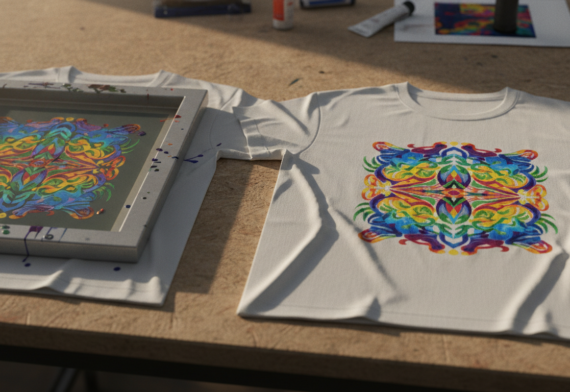
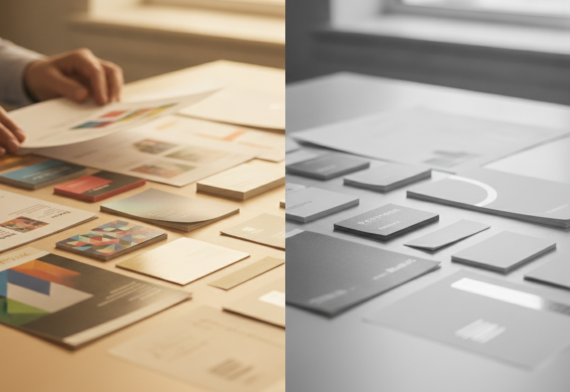
Our custom printing services extend well beyond labels. If your business also needs banners, flyers, brochures, or branded apparel, we handle all of it in one place — which simplifies your vendor relationships and keeps your branding consistent across formats. If you’re curious about how colour decisions affect the cost of multi-format print runs, our guide on Colour Printing Explained: When to Use Full Colour, When to Use Black-and-White, and How to Save Money breaks that down clearly.
For businesses that also need large-scale printing for events or trade shows, our signage capabilities complement label orders well — you can read more in our detailed guide on Large Format Printing in Toronto: Trade Show Displays, Wall Graphics, and Event Signage Made Easy.
Why Local Label Printing in Scarborough Makes a Practical Difference
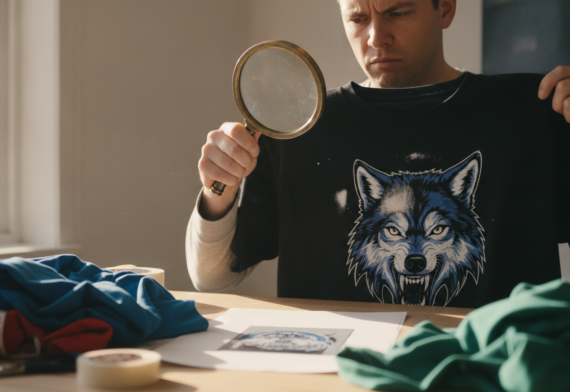
Working with a local print studio means you get direct access to the people making decisions about your job. Online print aggregators often act as middlemen, routing your files to whichever facility is available, with little visibility or control over what happens between upload and delivery. When something goes wrong — a colour shift, a cut misalignment, a material substitution — you’re waiting in a support queue instead of talking to someone who can fix it same day.
At Print Grafix, based in Scarborough, ON, we maintain a direct relationship with every client we work with. If you’re ordering print stickers toronto businesses use for product launches or pop-up markets, being able to review a physical proof before the full run goes to press is a service level that only a local studio can consistently provide.
The GTA is home to a dense and growing community of small businesses, food producers, boutique brands, and service providers — many of them in and around the Scarborough, Richmond Hill, and broader Toronto area. These businesses need custom printing that keeps pace with their growth, reflects their brand accurately, and arrives when they need it. That is what we build our workflow around.
For businesses that also manage printed operational documents, it’s worth noting that our full-service print capabilities cover business essentials as well. If you’ve ever needed fast document production for administrative use, our related article on Same-Day Cheque Printing: What Toronto Businesses Need to Know Before Ordering covers that process in detail.
Ready to Order Custom Labels for Your Business?
Our team at Print Grafix works with small businesses across the GTA to deliver high-quality labels, stickers, and branded print materials with fast turnaround and no enterprise minimums. Tell us about your project and we’ll recommend the right material, finish, and format for your needs.
Written by the Print Grafix Team
Print Grafix is a full-service printing studio based in Scarborough, ON, serving small businesses, entrepreneurs, and organizations across the Greater Toronto Area. We specialize in custom labels, branded apparel, marketing materials, signage, and business essentials — from design through to delivery.
Frequently Asked Questions
What is the best material for product labels that will be used on food packaging?
For most food packaging applications, white or clear vinyl with a matte or gloss laminate is the most reliable choice. Vinyl handles condensation and refrigeration without peeling, while lamination protects the printed design from moisture and handling. Kraft paper is a popular aesthetic option for dry-goods packaging, but it should not be used in cold or humid environments without added protection.
How do I prepare my artwork file for label printing?
The ideal file format is a print-ready PDF, AI (Adobe Illustrator), or EPS file at 300 DPI resolution. All fonts should be outlined or embedded, and the colour mode should be set to CMYK rather than RGB, since RGB colours can shift when converted for press output. If your file includes a bleed area, set it to at least 3mm beyond the cut line. Our team reviews all submitted files before production and will flag any issues that could affect print quality.
Why do label colours sometimes look different in print than on screen?
Screen displays use RGB colour (a light-based system), while commercial printing uses CMYK inks. The two systems have different colour ranges, so bright or highly saturated digital colours — particularly electric blues, vivid greens, and neon shades — often appear slightly different in print. Setting your design file to CMYK from the start and requesting a physical proof before your full run goes to press are the two most effective ways to avoid unexpected colour shifts.
Can I order a small quantity of custom labels without paying for a large minimum run?
Yes. At Print Grafix, we work with small businesses that need short runs as well as those ordering larger volumes. We understand that a business testing a new product, launching at a local market, or running a seasonal campaign does not need thousands of labels — and should not be forced to pay for them. Contact our team to discuss your quantity and we will provide a quote that fits your actual needs.