When you search for printing document near me, the results can be overwhelming — big-box stores, shipping centres, and local shops all competing for your attention. But walking into the wrong place unprepared can cost you time, money, and sometimes your deadline. At Print Grafix, we work with small businesses, entrepreneurs, and organizations across the GTA every day, and the questions we hear most often are practical ones: What file should I bring? What paper do I need? How much will it cost? This guide answers all of that — clearly and honestly — so your next walk-in printing experience goes exactly as planned.
Quick Answer
To print documents at a local shop in the GTA, bring your file as a PDF (preferred), PNG, or JPEG on a USB drive or shareable link. Confirm your paper size, finish, and quantity before arriving. Many local print studios like Print Grafix offer same-day turnaround on standard jobs — no appointment needed for most orders.
What File Format Should You Bring to a Print Shop?
The most reliable file format for any professional print job is a high-resolution PDF. PDF files preserve fonts, colours, and layout exactly as you designed them, reducing the risk of formatting shifts when a print technician opens your file on a different machine. For image-heavy pieces like posters or banners, a flattened PNG or TIFF at 300 DPI (dots per inch) or higher is the next best option.
JPEG files are acceptable for photographs and simple designs, but avoid them for anything with text or sharp lines — the compression artifacts that look fine on screen become visible at print size. Word documents and PowerPoint files can be accepted at some shops, but they carry risk. Font substitutions and margin shifts are common when those files move between systems. If you built your document in Word or Google Docs, export it as a PDF before you arrive.
Colour Mode: RGB vs. CMYK
Screen colours are built in RGB (red, green, blue), while commercial printers use CMYK (cyan, magenta, yellow, black) inks. If your file is in RGB and not converted before printing, the colours that come off the press can look noticeably different from what you saw on your monitor — especially deep blues and vibrant oranges. Most professional design software like Adobe Illustrator or InDesign lets you set the colour mode before you export. If you are unsure, ask the print team to flag any colour concerns before the job runs. At Print Grafix, our team reviews files before printing and will flag potential issues before the job runs.
Bleed and Safe Zone Basics
If your design runs colour or imagery right to the edge of the page, your file needs a bleed — typically 0.125 inches (3mm) of extra artwork beyond the trim line. Without bleed, a small shift during cutting can leave a thin white border along one edge. Keep all critical text and logos at least 0.125 inches inside the trim line (the “safe zone”) so nothing important gets cut off. These are standard requirements across the custom printing industry and apply whether you are printing business cards, flyers, or large-format banners.
How Do Paper Size and Stock Affect Your Print Job?
Paper choice is not just an aesthetic decision — it directly affects how your printed piece is perceived, how it handles, and how long it lasts. Standard letter size (8.5 x 11 inches) covers most everyday document and flyer needs, while legal (8.5 x 14) suits contracts and schedules. For marketing materials, common custom sizes like 4 x 6 postcards, 5.5 x 8.5 half-sheets, and 11 x 17 tabloid sheets are widely used by GTA businesses.
Paper weight is measured in pounds (lb) or grams per square metre (GSM). Standard office copy paper is 20 lb / 75 GSM — fine for internal documents but too thin for anything client-facing. For professional flyers and brochures, 80 lb text stock (about 120 GSM) strikes a good balance between quality and cost. Business cards typically use 14 pt card stock (approximately 350 GSM) or heavier to feel substantial in hand.
| Print Product | Recommended Paper Weight | Common Finish Options | Typical Use Case |
|---|---|---|---|
| Business Cards | 14 pt card stock (350 GSM+) | Gloss, Matte, Soft-touch | Networking, client handoffs |
| Flyers | 80 lb text (120 GSM) | Gloss, Uncoated | Promotions, events, distribution |
| Brochures | 100 lb gloss text (150 GSM) | Gloss, Matte, Satin | Service menus, product info |
| Banners | 13 oz vinyl (standard) | Gloss, Matte vinyl | Outdoor events, storefronts |
| Document Copies | 20 lb bond (75 GSM) | Uncoated | Internal docs, forms, contracts |
Gloss vs. Matte: Which Finish Is Right for You?
Gloss finishes make photographs and colour-rich designs pop with vibrancy and a reflective sheen. They are a strong choice for promotional flyers, brochures, and marketing materials where visual impact matters. Matte finishes absorb light rather than reflect it, giving a softer, more sophisticated look that works well for corporate documents, menus, and branded stationery. If your printed piece will need handwriting added (like a sign-in sheet or feedback form), always choose uncoated or matte — pen ink does not adhere reliably to gloss surfaces.
Where Can You Get Printing and Photocopying Near Me in the GTA?
For printing and photocopy near me searches in the GTA, your options generally fall into three categories: big-box retail chains, office supply stores, and independent local print studios. Each has trade-offs worth understanding before you walk through the door.
Big-box chains and shipping stores offer convenience and extended hours, but they are set up for volume self-serve work. For anything beyond a basic document copy, you will often find limited paper choices, standard equipment, and staff with little time to troubleshoot file issues. If you need printing photocopying near me for a last-minute internal document, those options are workable. For anything that represents your brand — a brochure, a banner, a set of business cards — the difference in quality and guidance from a dedicated print studio is significant.
Independent local print studios like Print Grafix, based in Scarborough, ON, offer a full-service approach: a team that reviews your file, recommends the right stock, handles design adjustments if needed, and delivers a finished product that reflects your brand accurately. For small businesses and organizations across the GTA, that combination of local access and professional output is often exactly what is needed.
When comparing options for printing copies near me, also consider turnaround time. Standard retail copy centres can handle same-day basic copies, but custom print work often requires 3 to 5 business days. A local studio focused on small and medium business work is typically more flexible on rush timelines because they are not managing thousands of daily orders from a corporate queue.
“The right local print partner does more than run your file through a machine — they catch issues before the press runs, recommend the right materials for your budget, and ensure your brand looks consistent across every format.”
What Should You Expect to Pay for Local Print Services?
Print pricing depends on four core variables: quantity, paper stock, size, and finishing options. Understanding these helps you plan a realistic budget before you request a quote.
Quantity has the biggest impact on unit cost. A run of 50 flyers will cost considerably more per piece than a run of 500, because setup time is roughly the same regardless of volume. If you are planning a marketing push, ordering a larger quantity upfront almost always delivers better value than repeat small runs. This is true whether you are ordering through a paper printing near me search or working directly with a print studio on a campaign.
Finishing options — lamination, spot UV coating, die-cutting, folding — each add to the cost but also add perceived quality. A laminated business card feels entirely different in hand than an uncoated one, and that difference registers with the person receiving it. For businesses investing in branded materials, finishing is rarely a place to cut corners.
For large format printing toronto projects — event banners, trade show displays, window graphics, and exterior signage — pricing scales with square footage and material type. Vinyl banners, fabric displays, and rigid board prints each carry different material costs. Getting a detailed quote that specifies material, size, and hemming or mounting options will prevent surprises. If you are preparing for an upcoming trade show, the Trade Show and Event Printing Checklist: Everything GTA Businesses Need Before the Big Day outlines exactly what to order and when.
Custom printing services that bundle design, production, and delivery under one roof — the model we operate on at Print Grafix — tend to offer better overall value than sourcing each component separately. You save on coordination time, avoid version-control errors between a designer and a separate printer, and get a consistent output across all your materials.
How Do Same-Day and Rush Printing Work at a Local Print Studio?
Same-day printing is available for select jobs when your file arrives print-ready, early in the business day. Not every job qualifies — large-format runs, multi-part booklets, and jobs requiring specialty finishing typically need more lead time. But for standard flyers, document copies, business cards, and labels, same-day turnaround is a realistic expectation at a well-equipped local studio.
The single biggest factor in whether your job can go same-day is file readiness. A print-ready PDF with correct dimensions, bleed, and colour mode moves straight to the press. A file that needs resizing, font correction, or colour conversion adds time — sometimes an hour, sometimes more. If you are searching for custom printing toronto with a tight deadline, calling ahead to confirm file requirements before you arrive is the most effective way to protect your timeline.
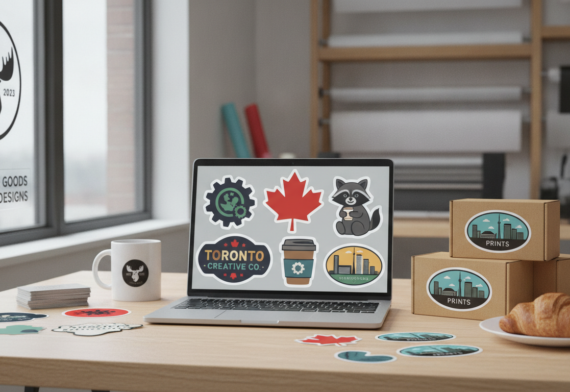
At our Scarborough, ON studio, we work directly with clients on rush requests and can often accommodate same-day needs for standard print products when orders are placed before mid-morning. For branded apparel, stickers, decals, and specialty items, lead times vary — but we are transparent about realistic timelines upfront so there are no surprises.
For businesses planning ongoing print needs — monthly promotions, seasonal signage, event materials — building a relationship with a local custom printing studio removes the rush-fee cycle entirely. When your templates are on file and your preferences are known, reorders move quickly without the back-and-forth of starting fresh each time.
If you are also exploring options for branded apparel alongside your document and signage printing, the Where Can You Print Documents, Copies, or Photos? Your Options Explained guide breaks down the broader print landscape in plain terms.
What Else Can a Full-Service GTA Print Studio Handle for Your Business?
Most businesses that come in for a one-time document print job discover that a full-service studio handles far more than they expected. At Print Grafix, our services span the full range of what a growing GTA business typically needs across its marketing and operational print materials.
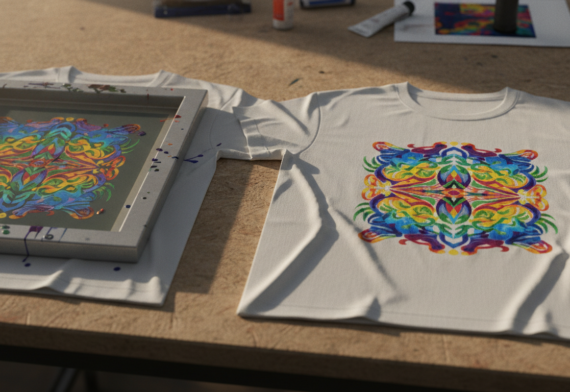
For marketing and advertising, we produce flyers, brochures, banners, and large-format signage that are designed to work in real-world environments — not just look good on a proof. For business operations, we print everything from business cards and letterhead to branded forms and signage. For events and promotions, branded apparel and gifts carry your identity beyond the printed page.
The advantage of working with one trusted vendor across all these formats is consistency. Your logo prints at the same colour values on your business card as it does on your trade show banner. Your team’s branded shirts match the colour of your storefront sign. That level of consistency builds brand recognition in a way that piecemeal printing across multiple vendors rarely achieves.
For businesses located across the GTA — from Scarborough to Richmond Hill, Mississauga to downtown Toronto — local print access matters for more than just convenience. Working with a GTA-based studio means shorter delivery distances, easier revision rounds, and a team that understands the local market your materials are serving.
Ready to Print? Let’s Get Your Job Done Right.
Whether you need a fast run of flyers, a full set of branded business materials, or large-format signage for an upcoming event, our team at Print Grafix is ready to help. Bring your file, tell us your deadline, and we will take it from there — from paper selection to finished product.
About the Author
The Print Grafix Team is a group of print and design professionals based in Scarborough, ON, serving small businesses, entrepreneurs, and organizations across the Greater Toronto Area. We write from hands-on experience across every product we produce — from business cards and banners to branded apparel and large-format signage.
Frequently Asked Questions
How do I prepare my file before visiting a local print shop?
Export your file as a high-resolution PDF with CMYK colour mode, 300 DPI resolution, and 0.125-inch bleed on all sides if your design goes to the edge. Store it on a USB drive or a shareable cloud link. Arriving with a print-ready file is the single most effective way to enable same-day turnaround and avoid revision delays.
What is the difference between standard document printing and custom printing?
Standard document printing typically refers to black-and-white or colour copies on plain bond paper — forms, contracts, internal reports, and similar materials. Custom printing covers branded and marketing materials produced on a range of stocks with professional finishes: business cards, brochures, banners, signage, labels, and branded merchandise. Custom printing involves more file preparation and equipment, which is why it is best handled by a dedicated print studio rather than a self-serve kiosk.
Why does colour sometimes look different in print than on screen?
Screens display colour using RGB (red, green, blue) light, which produces a wider and brighter colour range than what commercial printing equipment can physically reproduce using CMYK inks. Vibrant screen colours — particularly bright blues, greens, and oranges — often shift when converted to CMYK for press. Setting your design file to CMYK from the start, and requesting a proof before full production, are the most reliable ways to ensure the printed result matches your expectations.
Can I order a small quantity of business cards or flyers, or is there a minimum?
Most local print studios, including Print Grafix, accommodate small-quantity orders for businesses that do not need large runs. While unit costs are higher at lower quantities due to setup, small batches are a practical solution for new businesses testing a design, event-specific materials, or organizations with limited distribution needs. Contact our team directly to discuss quantity options and what makes sense for your specific job.
Written by the Print Grafix Team
Our team brings deep expertise — We provide printing services.