What Every GTA Business Owner Should Know Before Ordering Custom Apparel
If you’ve started researching custom shirt printing for your business, team, or event, you’ve almost certainly come across the term DTG printing. It shows up everywhere, often alongside claims about photo-quality results and no minimum order quantities. Some of that is accurate. Some of it depends entirely on what you’re printing, what fabric you’re using, and how many pieces you actually need. At Print Grafix, we work with small businesses, entrepreneurs, and organizations across the GTA every week, and we see the same questions come up repeatedly. This guide gives you straightforward answers so you can order with confidence.
Quick Answer
DTG printing is a digital process that sprays water-based ink directly onto fabric, much like a desktop printer on paper. It excels at small runs, complex artwork, and full-colour photo prints on cotton garments, but it is less cost-effective for large orders and performs poorly on synthetic or dark blended fabrics without proper pre-treatment. It is best suited to runs of roughly one to fifty pieces where detail and colour range matter more than cost-per-unit.
How Does DTG Printing Actually Work?
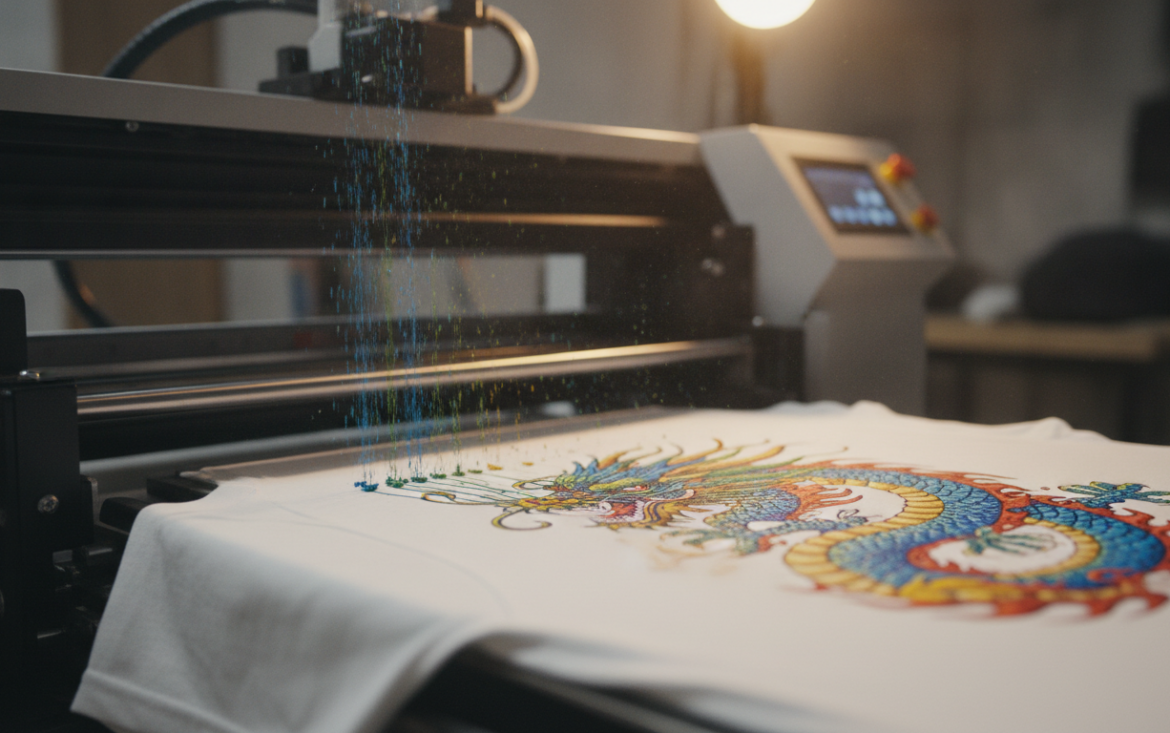
DTG printing works by loading a garment onto a flat platen, applying a pre-treatment solution to help the ink bond with the fibres, and then passing a print head over the fabric to deposit ink in precise droplets. The result is a print that becomes part of the garment rather than sitting on top of it as a heavy layer.
The process begins with artwork preparation. Your design file is converted into a format the printer can read, with colours mapped to the ink channels available in the machine. For light-coloured garments, the printer lays down colour inks directly. For dark garments, a white underbase is printed first, and then the colour layers are printed on top. This two-pass approach on darks is what makes rich, vibrant prints possible on navy, black, or charcoal shirts.
After printing, the garment goes through a heat curing stage, typically in a tunnel dryer or heat press, which locks the ink into the fibres and determines how well the print will hold up through repeated washing. Proper curing is one of the most important steps, and it’s one of the reasons working with an experienced local printer matters more than many buyers initially realize.
What Kind of Files Work Best for DTG?
High-resolution PNG files with transparent backgrounds are the standard. Vector files (AI, EPS, or PDF) can be rasterized for the printer and generally produce clean results. Low-resolution JPEGs or heavily compressed files will produce prints that look soft or pixelated, regardless of how good the printer is. If you’re working with our team at Print Grafix, we’ll flag any file issues before production begins so there are no surprises.
What Are the Real Strengths of DTG Printing?
DTG printing’s core strengths are design freedom, low minimum quantities, and colour complexity. If your artwork has gradients, photographic detail, or dozens of colours, DTG handles all of it without any additional setup cost per colour.
For small businesses ordering branded apparel in Canada, this is a practical advantage. You don’t need to commit to a hundred units to get a professional result. A startup that needs ten staff shirts in three different sizes, or a local organization that wants twenty event shirts with a full-colour logo, can get exactly what they need without overproducing inventory.
The print-on-demand nature of DTG also makes it well-suited to personalization. Each garment can carry a different name, number, or even a different image, with no reprinting of screens or plates between pieces. For sports teams, volunteer groups, or businesses running employee recognition programs, that flexibility is genuinely useful.
From a colour accuracy standpoint, DTG can reproduce subtle shading, skin tones, and photographic gradients that would be difficult or cost-prohibitive to replicate with screen printing. If your brand identity relies on exact colour matching or complex graphic detail, DTG gives you precision that simpler methods can’t match at low quantities.
DTG printing is the right choice when your design is more complex than your quantity is large. For detailed artwork at small runs, it consistently outperforms the alternatives on both quality and cost.
What Are the Limitations You Should Know Before You Order?
DTG printing is not the right fit for every project, and knowing its limitations upfront saves time and money. The two most common constraints are fabric type and volume pricing.
Fabric Compatibility
DTG inks bond best with natural fibres, particularly 100% cotton. Blended fabrics (cotton-polyester mixes) can produce acceptable results, but the polyester content in the blend affects how well the pre-treatment adheres and how vibrant the final print appears. Fabrics that are predominantly polyester, nylon, or other synthetics are generally not suitable for DTG without significant compromise in print quality. If your garments are athletic wear or moisture-wicking fabrics, a different method such as DTF (direct-to-film) transfer may be a better fit. You can learn more about how that process works in our detailed guide: What Is DTF Printing? How Direct-to-Film Works and Why It’s Changing Custom Apparel.
Cost per Unit at High Volumes
At low quantities, DTG is very competitive. As order volume increases, however, the cost-per-unit does not drop as dramatically as it does with screen printing. For orders above roughly one hundred units of the same design, screen printing typically becomes more economical because the setup cost (creating the screens) is spread across a larger run. DTG has no comparable setup cost savings at scale. If your order is large and your design uses only a few solid colours, screen printing is likely the better value.
Wash Durability
When garments are properly pre-treated and cured, DTG prints are durable and wash-resistant. That said, they tend to fade slightly more over time than screen-printed graphics, particularly if garments are washed at high temperatures or dried on high heat. Care instructions matter: washing inside-out in cool water and air drying will significantly extend the life of a DTG print. This is a standard recommendation we pass along with every order at our Scarborough studio.
How Does DTG Compare to Other Common Printing Methods?
DTG is one of several methods used in custom printing for apparel. Understanding where it sits relative to other options helps you make an informed decision rather than defaulting to whatever your printer recommends first. The comparison below covers the methods most commonly requested by our GTA clients.
| Method | Best For | Minimum Quantity | Fabric Compatibility | Colour Complexity |
|---|---|---|---|---|
| DTG (Direct-to-Garment) | Small runs, detailed or photo artwork | 1 piece | Best on 100% cotton | Unlimited colours |
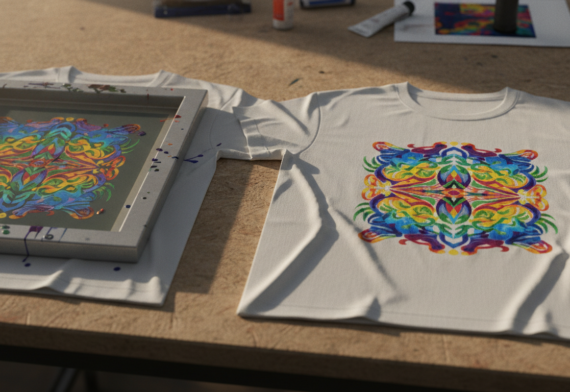
| Screen Printing | Large runs, bold simple designs | Typically 24–50 pieces | Most fabrics | Limited by number of screens (cost rises per colour) |
| DTF (Direct-to-Film) | Synthetic fabrics, mixed materials | 1 piece | Nearly all fabric types | Unlimited colours |
| Heat Transfer Vinyl (HTV) | Simple one or two colour designs | 1 piece | Most fabrics | Best with solid colours, limited gradients |
The right method depends on your specific order, and there is no universally superior choice. When clients come to us at Print Grafix in Scarborough, we review the design, fabric, quantity, and timeline together before recommending anything. The goal is always to get you the best result for your actual needs, not simply to route everything through one process.
For businesses that also need materials beyond apparel, such as banners, signage, or branded print collateral, it helps to work with a printer who handles multiple formats. Our guide on Large Format Printing in Toronto: Trade Show Displays, Wall Graphics, and Event Signage Made Easy covers the other end of the print spectrum if you’re preparing for an event or trade show.
Is DTG Printing the Right Choice for Your Business?
DTG printing is the right choice when your priority is design quality at a small-to-medium quantity on cotton garments. It is not ideal when your budget is tight on a large uniform order or when your garments are predominantly synthetic.
For small businesses and entrepreneurs across the GTA, DTG often makes the most sense for branded gifts, staff shirts, event merchandise, and promotional giveaways where the design is detailed and the quantity is modest. It is also practical for organizations that need to reorder in small batches over time rather than committing to a single large run upfront.
The t shirt printing market in Canada has expanded significantly as digital printing technology has matured. Buyers today have genuine options across methods and price points, and that’s a good thing. But it also means the conversation about which method to use deserves more than a default answer. Quality DTG results depend on the garment blank, the artwork file quality, the pre-treatment process, and the curing settings, all of which are under the control of your printer. That’s why sourcing from a local studio with hands-on experience matters as much as the technology itself.
Custom printing for apparel is part of a broader branded materials strategy for most of our clients. A business that invests in quality staff shirts also tends to care about the consistency of their business cards, flyers, and banners. When all of that comes from one trusted source, the brand stays cohesive and the communication stays simple. That’s the reason so many GTA businesses have chosen to work with Print Grafix for both their apparel and their broader print needs.
If you’re also thinking through how colour choices affect the rest of your print materials, it’s worth reading our breakdown of Colour Printing Explained: When to Use Full Colour, When to Use Black-and-White, and How to Save Money. The principles apply across formats, from garments to marketing collateral.
Custom apparel in Canada is a competitive space, and buyers benefit from working with printers who are transparent about trade-offs rather than overselling any single method. At our Scarborough studio, we believe the best order is the one that actually serves your needs, produced on time, at a fair price, and with the quality your brand deserves.
Ready to Print Your Custom Apparel?
Whether you’re ordering ten shirts with a detailed logo or fifty pieces for a team event, our team at Print Grafix is here to help you choose the right method and get it done right. We handle everything from file review to printing to delivery, with fast turnaround times and competitive pricing for GTA businesses of every size.
The Print Grafix Team works with small businesses, entrepreneurs, and organizations across the Greater Toronto Area from their studio in Scarborough, ON. With a full-service approach covering everything from branded apparel and business cards to banners and large format signage, the team brings hands-on print expertise and personalized service to every project they take on.
Frequently Asked Questions
How many shirts do I need to order for DTG printing to make sense?
DTG printing can accommodate orders as small as a single piece, which is one of its defining advantages. It is most cost-competitive for runs between one and approximately fifty units. For orders larger than that, particularly those using simple artwork with few colours, screen printing often provides a lower cost per unit. If you’re unsure which threshold applies to your project, sharing your design and quantity with our team at Print Grafix allows us to recommend the most practical option before you commit.
What fabric types work best with DTG printing?
100% cotton is the ideal fabric for DTG printing. The natural fibres absorb the water-based ink well, and the pre-treatment bonds effectively to produce vibrant, durable results. Cotton-polyester blends (such as 50/50 or 60/40) can be used but may produce slightly softer colour output depending on the blend ratio. Fabrics that are predominantly or entirely synthetic, such as polyester athletic wear, are generally not recommended for DTG. For synthetic garments, DTF printing is a more reliable alternative.
Why do dark-coloured shirts cost more to print with DTG?
Dark garments require a white ink underbase to be printed before the colour layers are applied. This underbase prevents the dark fabric from showing through the design and allows colours to appear accurately. Printing an underbase adds ink volume, machine time, and in some cases an additional heat-curing pass, all of which contribute to a higher cost compared to printing on light or white garments. This is standard practice across the DTG industry and is not specific to any single printer.
Can I mix different designs in a single DTG order?
Yes, and this is one of the strongest practical arguments for DTG over screen printing. Because there are no screens to set up and no ink mixing per design, each garment can carry a completely different graphic within the same order. This makes DTG particularly well-suited to personalized gifts, name-specific team apparel, or any situation where each piece needs to be unique. Each design is treated as an individual print job, so pricing is based on the complexity and size of each individual graphic rather than the total quantity of mixed designs.
Written by the Print Grafix Team
Our team brings deep expertise — We provide printing services.