What Is Silkscreen Printing, and Why Do So Many Brands Still Rely on It?
Silkscreen printing is one of the oldest and most trusted methods in the print industry, and for good reason: it produces vivid, durable results that hold up wash after wash, weather season after season, and look just as sharp on the hundredth piece as on the first. If you have ever picked up a branded t-shirt at a trade show, peeled a crisp label off a product bottle, or admired the bold logo on a retail bag, there is a reasonable chance silkscreen printing was behind it.
At Print Grafix, we work with small businesses, entrepreneurs, and organizations across the GTA every day, and we find that silkscreen is one of the techniques people ask about most — often because they have heard the name but are not entirely sure what happens between artwork submission and finished product. This guide explains the full process in plain language, so you can make a confident decision about whether it is the right fit for your next print run.
Quick Answer
Silkscreen printing (also called screen printing) transfers ink through a mesh stencil onto a surface one colour at a time. It is best suited for bold, single- or limited-colour designs printed in medium to large quantities, delivering exceptional colour vibrancy and durability compared to most digital alternatives.
How Does the Screen Printing Process Actually Work?
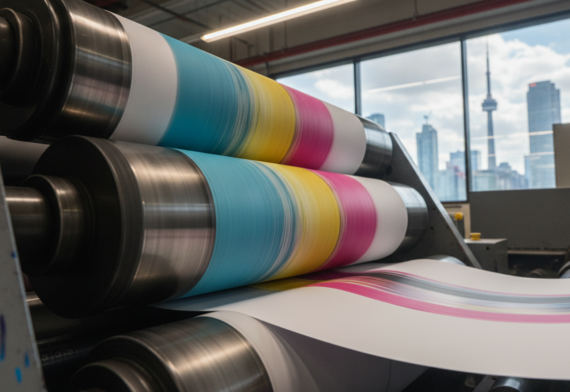
Screen printing is a stencil-based process: ink is pushed through a fine mesh screen onto the substrate below, depositing a clean, solid layer of colour. Each colour in a design requires its own dedicated screen, which is why understanding the process starts with understanding colour separations.
Step 1 — Artwork Preparation and Colour Separation
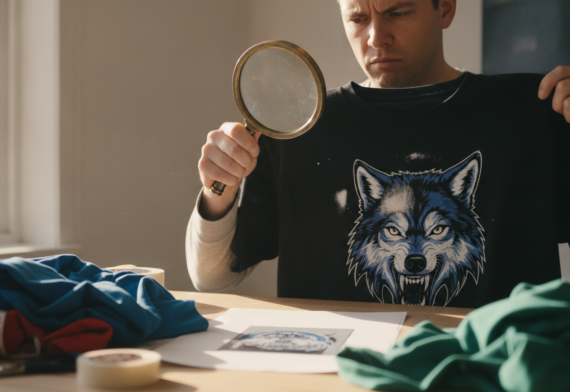
Before a single screen is made, your artwork needs to be prepared as vector files or high-resolution raster files, with each colour isolated on its own layer. If your logo uses three colours, the file is separated into three distinct components. This stage is where good pre-press work pays off: sloppy separations lead to misregistration (colours that do not line up correctly), blurred edges, or muddy overlaps on the final print.
Our team at Print Grafix reviews every file before we burn screens, catching issues at the artwork stage rather than after setup costs have been incurred. For customers who do not have print-ready files, we offer design support as part of our full-service approach.
Step 2 — Screen Preparation (Burning the Screen)
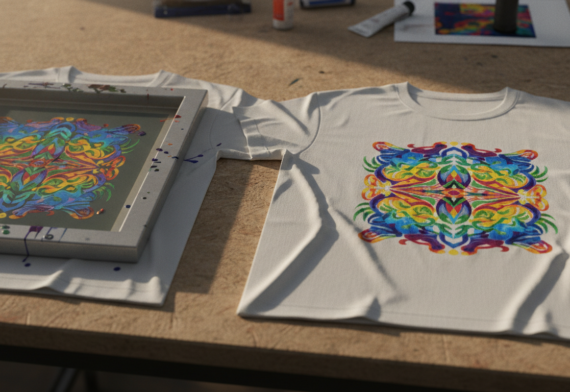
A mesh screen — historically made from silk, which is where the name silkscreen printing originates — is coated with a light-sensitive emulsion. The colour separation film is placed over the screen and exposed to UV light. Where the light hits, the emulsion hardens; where the film blocks it (your design area), the emulsion washes away, leaving an open stencil. That open mesh is exactly where ink will pass through.
Modern screens use polyester mesh rather than actual silk, but the principle of printmaking through screen printing has not changed in decades. The mesh count (threads per inch) is selected based on the detail level and ink type required: finer mesh for detailed graphics, coarser mesh for heavy ink deposits like puff inks or metallics.
Step 3 — Printing
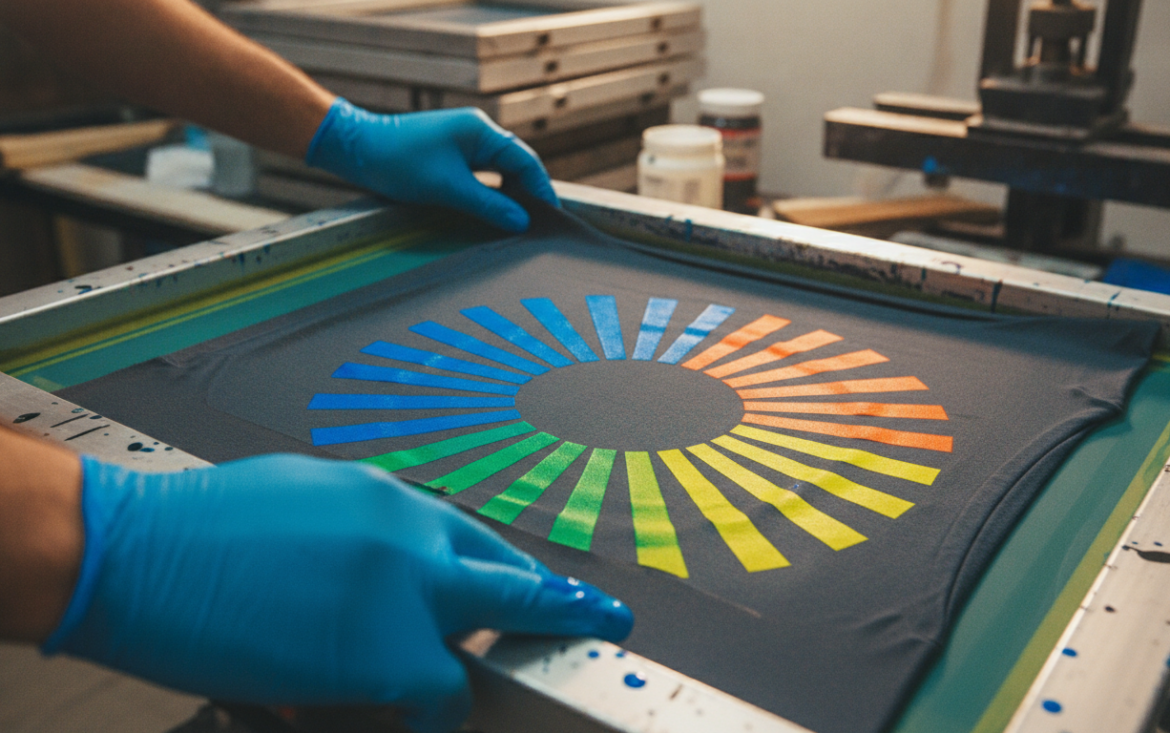
The substrate (a t-shirt, tote bag, poster, label stock, or other surface) is positioned beneath the screen. Ink is poured at one end of the screen, and a squeegee is drawn across, forcing ink through the open mesh areas onto the material below. This is repeated for every piece in the run. For multi-colour designs, the substrate moves through one station per colour, with precise registration ensuring each layer lands exactly where it should.
Step 4 — Curing
Once printed, the ink must be cured — typically by passing through a conveyor dryer at a controlled temperature. Proper curing is what gives screen-printed materials their legendary durability. Under-cured prints wash out; properly cured prints bond to the substrate at a molecular level and can last years under heavy use. For specialty inks (discharge, water-based, or plastisol), cure temperatures and dwell times vary, and getting this right is a craft in itself.
What Types of Inks Are Used in Screen Printing, and How Do They Differ?
The ink type determines how a finished print looks, feels, and performs over time. The right choice depends on your substrate, intended use, and the aesthetic you are after.
| Ink Type | Best For | Feel on Fabric | Durability |
|---|---|---|---|
| Plastisol | Apparel, promotional items | Sits on top of fabric, slightly raised | Very high — industry standard |
| Water-Based | Soft-hand prints, fashion apparel | Soaks into fabric, very soft | High when properly cured |
| Discharge | Dark garments, vintage look | Removes dye and replaces it, smooth | Very high — becomes part of fabric |
| Metallic / Specialty | Promotional gifts, branded packaging | Raised, reflective finish | Moderate to high depending on application |
Plastisol is the most common ink in commercial screen printing because it is forgiving to work with, produces vivid colours on both light and dark substrates, and offers outstanding wash durability. Water-based and discharge inks are increasingly popular for fashion-forward brands that want a softer, more “worn-in” feel. Our team can help you choose the right ink system once we understand what the finished product needs to do.
When Is Screen Printing the Right Choice — and When Is It Not?
Screen printing excels at bold, limited-colour designs produced in volume. It is not always the best tool for every job, and an honest print partner will tell you that upfront.
Where Screen Printing Wins
The setup cost for silkscreen printing (screen production, emulsion, alignment) means the per-unit cost drops significantly as quantities increase. For runs of 24 pieces or more, screen printing typically delivers a lower cost per unit than digital methods, while producing colours that are more vibrant and opaque. This makes it the preferred method for branded apparel, promotional products, event merchandise, and marketing materials where consistency across a large batch is essential.
Screen printing also performs exceptionally well on substrates that challenge inkjet or laser processes: textured fabrics, coated papers, rigid plastics, and specialty materials. If you need a logo on a canvas tote that will still look sharp after two years of daily use, screen printing is a strong choice.
Screen-printed colours sit thicker on the substrate and reflect light differently than digitally printed colours, which is why a screen-printed logo often looks richer and more saturated in person than on a monitor preview.
Where Other Methods May Serve You Better
If your design includes photographic gradients, dozens of colours, or fine details smaller than a few millimetres, screen printing becomes complex and expensive. Each additional colour is an additional screen and an additional pass through the press. For highly detailed, full-colour artwork on small runs, digital printing methods (such as DTF, direct-to-garment, or large format digital) will likely produce better results at lower cost. Our article on What Is DTF Printing? How Direct-to-Film Works and Why It’s Changing Custom Apparel covers that method in detail if you want to compare.
Similarly, very small runs (fewer than 12 to 24 pieces) often do not justify the screen setup costs. In those situations, we typically recommend digital alternatives that have no minimum order requirements.
What Should You Prepare Before Ordering Screen Printing?
Having the right materials ready before you place your order saves time, reduces revision cycles, and helps our team deliver your project on schedule. Here is what matters most.
Artwork Format
Vector files (AI, EPS, or PDF with outlined fonts) are ideal. They scale to any size without quality loss, and colour separations are straightforward to build from them. High-resolution raster files (300 dpi or higher at print size) are acceptable for many projects, but converting a low-resolution file into a print-ready screen is not always possible without redrawing the artwork. If your logo only exists as a small JPEG from your website, let us know early — our design team can rebuild it properly.
Colour Specifications
Screen printing uses solid spot colours, most commonly specified using the Pantone Matching System (PMS). If brand colour accuracy is critical to your business, providing PMS codes ensures your printed output matches your brand standards regardless of which press or ink batch is used. If you do not have PMS references, we can work from your existing materials and get as close as possible, but specifying colours upfront always produces the most accurate result.
Substrate and Quantity
Know what you are printing on and how many pieces you need before you request a quote. The substrate affects ink choice, screen mesh count, and cure settings. Quantity affects pricing significantly: ordering 100 units versus 500 units may change the per-unit cost considerably, so if you anticipate needing more in the near future, it is worth pricing both quantities at once.
For GTA businesses planning for trade shows, pop-ups, or seasonal campaigns, it is also worth looking at our Trade Show and Event Printing Checklist: Everything GTA Businesses Need Before the Big Day to coordinate your screen-printed items alongside banners, signage, and other marketing collateral.
How Does Screen Printing Fit Into a Broader Print Strategy for GTA Businesses?
Screen printing is rarely a standalone decision — it is one part of a broader branded materials ecosystem. A business in Scarborough running a product launch, for example, might combine screen-printed branded apparel for staff, digitally printed flyers and brochures for distribution, and large format printed banners for the event space. Each method plays to its strengths, and coordinating them through one print provider keeps branding consistent and logistics simple.
At Print Grafix, our full-service offering covers all of these categories. When you bring your project to us, we look at the complete picture rather than just the individual item in front of us. If screen printing is the right answer for your branded apparel but digital output makes more sense for your marketing collateral, we will tell you that — and handle both under one roof.
Custom printing across multiple formats also gives you more flexibility to test what works. A smaller run of digitally printed postcards paired with a screen-printed tote can tell you a great deal about which materials your audience responds to before you commit to a larger investment in either direction. This kind of thinking is what separates a reactive print buyer from one with a real brand strategy behind their spending.
For businesses searching for custom printing toronto options or looking for screen printing near me in the GTA, working with a local studio matters for more than convenience. When you can walk in with your samples, discuss your brand story, and see proofs in person, the final product reflects that collaboration. Our Scarborough studio serves clients from across the GTA, including Richmond Hill and Toronto proper, with the same personalized attention regardless of project size.
Large format printing toronto clients often layer screen printing with wide-format output for cohesive campaigns. A screen-printed banner stand graphic and a digitally printed foam board display might share the same artwork, but each requires a different production path. Knowing how to manage both — and how to get the colours to match across methods — is a production skill that comes from experience, not just equipment.
Screen printing also pairs well with finishing services. Lamination (which some clients from Richmond Hill and surrounding areas have asked us about specifically) can be applied to screen-printed paper-based outputs to add a protective coating, increase durability, and give a premium feel to marketing materials. Whether the final look calls for a gloss, matte, or soft-touch finish, the combination of screen printing and lamination produces a result that feels distinctly high-end.
Ready to Print? Let’s Talk About Your Project.
Whether you are planning branded apparel for your team, promotional items for an upcoming event, or marketing materials that need to stand out, our Scarborough studio is ready to help. At Print Grafix, we review your artwork, advise on the best print method, and deliver quality results on a timeline that works for your business.
Written by the Print Grafix Team
We are a full-service printing studio based in Scarborough, ON, working with small businesses and organizations across the Greater Toronto Area. From branded apparel and business cards to banners and large format displays, we handle every step from design to delivery.
Frequently Asked Questions
How many colours can a screen-printed design include?
Screen printing can technically accommodate many colours, but each colour requires its own screen and production pass, which increases setup time and cost. Most commercially practical screen print jobs use between one and six colours. For designs with more complexity than that, a digital printing method is usually more cost-effective. If your brand uses two or three solid colours, screen printing is very well suited to your needs.
What is the minimum order quantity for screen printing?
Minimum order quantities vary by shop and by substrate, but most screen printing projects become cost-effective starting around 24 to 50 pieces. The setup cost (screen production, colour separation, press registration) is spread across the entire run, so smaller quantities carry a higher per-unit cost. If you need fewer pieces, we will recommend a digital alternative that fits your budget and delivers a great result.
Why does screen printing cost more upfront than digital printing?
The upfront cost of screen printing reflects the physical setup required: creating and burning screens, mixing inks to spec, calibrating the press for registration, and running test prints. These steps take skilled labour and materials before a single finished piece is produced. That setup cost is offset by the low marginal cost per additional unit once the press is running, which is why screen printing becomes the economical choice at higher volumes.
Can I use screen printing for both apparel and paper-based materials?
Yes. Silkscreen printing is a highly versatile process applied to fabrics, paper, cardboard, plastic, wood, glass, and more. The ink system and mesh count change depending on the substrate, but the core process remains the same. At Print Grafix, we apply screen printing across branded apparel, promotional gifts, marketing materials, and packaging applications, tailoring the technical specifications to whatever surface your project requires.