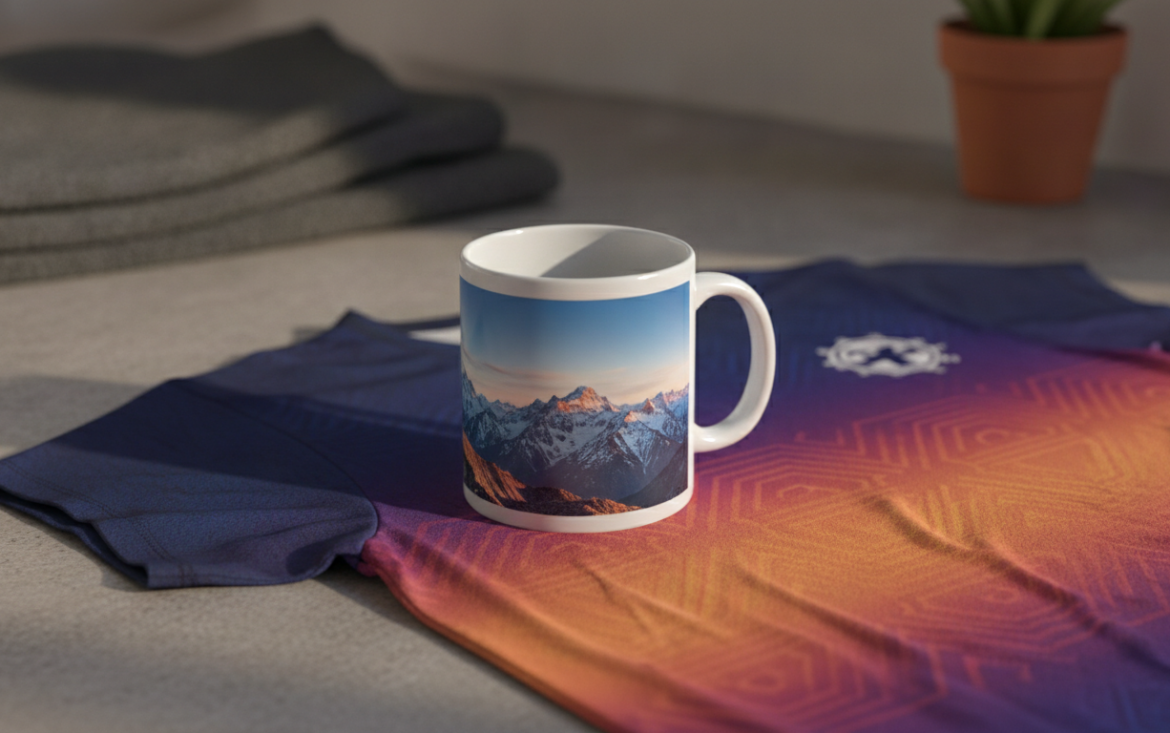
If you have ever held a full-colour mug with a photo wrapped perfectly around it, or worn a jersey where the design feels like part of the fabric rather than sitting on top of it, you have already seen sublimation printing in action. It is one of the most misunderstood processes in the custom printing world, partly because the name sounds more like a chemistry lecture than a practical production method. This guide cuts through the jargon so you can decide quickly and confidently whether sublimation is the right choice for your next project — or whether a different process will serve you better.
Quick Answer
Sublimation printing uses heat and pressure to convert dye into gas, which bonds permanently into polyester fabric or polymer-coated hard substrates. The result is a vivid, full-colour print that will not crack, peel, or fade with normal washing. It works best on light-coloured polyester apparel, mugs, phone cases, and awards — but it cannot print on 100% cotton or dark-coloured fabrics.
How Does Sublimation Printing Actually Work?
Sublimation printing works by converting specially formulated dye directly from a solid state into a gas — skipping the liquid stage entirely — and then bonding that gas into the surface of a compatible substrate under high heat and pressure. The science behind this is straightforward: when a sublimation transfer is pressed against a polyester-coated surface at temperatures around 190 to 210 degrees Celsius, the dye vaporises and the heat simultaneously opens the pores of the material. The gas enters those pores, the press releases, the pores close, and the dye is locked in permanently.
Because the dye becomes part of the substrate rather than sitting on top of it, sublimation prints have a texture that is completely smooth to the touch. There is no raised ink layer, no rubbery feel, and no film that can eventually crack or peel. The colour also tends to be exceptionally bright and saturated because the dye absorbs into a white or light background rather than mixing with an existing colour.
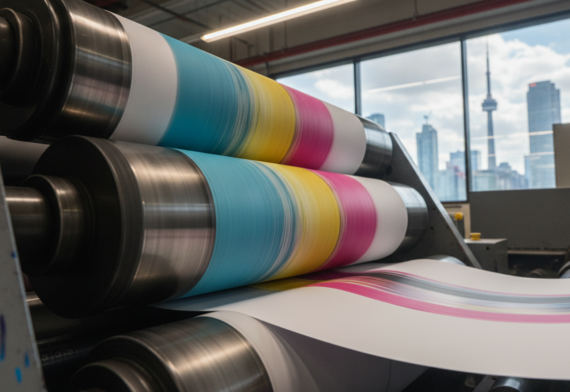
The process begins with a design file printed onto special sublimation transfer paper using sublimation inks in a compatible inkjet printer. That transfer is then positioned on the substrate and run through a heat press or a conveyor oven. The whole cycle, from press to finished product, is typically measured in seconds to minutes depending on the item. For businesses that need printed materials quickly, this speed is a real practical advantage.
“Because the dye becomes part of the substrate rather than sitting on top of it, sublimation prints have a texture that is completely smooth to the touch — there is no raised ink layer, no rubbery feel, and no film that can eventually crack or peel.”
What Materials and Products Can You Sublimate On?
Sublimation works on any substrate that is either made of polyester or coated with a polymer layer that accepts sublimation dye. This covers a wider range of products than most people expect when they first hear about the process.
Polyester Apparel and Textiles
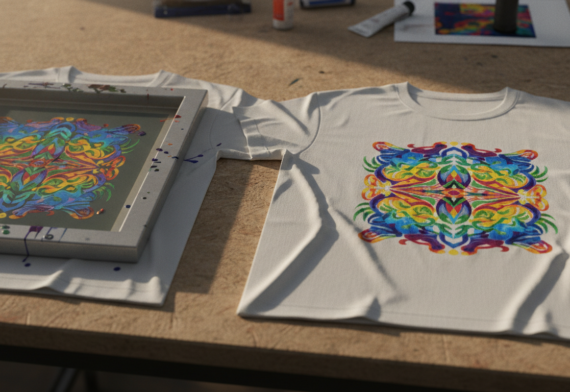
Polyester fabric is the most common sublimation substrate. Sports jerseys, performance wear, yoga pants, team uniforms, and promotional t-shirts made from 100% polyester all accept sublimation dye beautifully. The print can cover the entire garment from seam to seam — a technique known as all-over printing — without any additional cost or complexity per additional colour. This makes sublimation particularly attractive for vibrant, photo-quality, or highly detailed designs where screen printing would require expensive colour separations.
The key limitation here is fabric composition. Sublimation on a 50/50 polyester-cotton blend will produce a noticeably washed-out result because the dye only bonds with the polyester fibres. On a 100% cotton shirt, the effect is almost invisible. If your team needs branded cotton apparel, our team at Print Grafix would typically recommend DTF printing or DTG printing instead, both of which perform well on natural fibres.
Mugs, Drinkware, and Ceramics
Sublimation mugs are one of the most popular ways to print on gifts for corporate clients, event giveaways, and employee recognition programs. The mug must have a polymer coating applied to its surface during manufacturing. Without that coating, the dye has nothing to bond to and the print will not adhere. Standard white sublimation mugs are widely available and produce vivid, dishwasher-resistant results when printed correctly.
Hard Substrates: Phone Cases, Awards, and Panels
Phone cases, aluminium panels, mouse pads, keychains, coasters, and acrylic awards all work well with sublimation, provided they carry the right polymer coating. Metal photo panels produced through a sublimation process called dye-sublimation on aluminium have become a popular choice for recognition awards and high-end wall art because the resulting image has exceptional depth and a slight sheen that conventional paper printing cannot match.
What Sublimation Cannot Do
Sublimation cannot print on dark-coloured substrates in any meaningful way. Because the dye is translucent, it relies on a white or very light background to reflect colour accurately. Attempting sublimation on a navy mug or a black polyester shirt will produce little to no visible result. It also cannot produce white ink, which means any white areas in a design must come from the substrate itself rather than the printed dye.
How Does Sublimation Compare to Other Printing Methods?
Sublimation is one of several custom printing processes available, each suited to different materials, quantities, and design requirements. Choosing the wrong method is one of the most common and avoidable mistakes in custom merchandise production.
| Method | Best Substrate | Works on Dark Fabrics | Ideal For | Print Feel |
|---|---|---|---|---|
| Sublimation | Polyester / polymer-coated hard goods | No | Gifts, awards, sportswear, mugs | Smooth, embedded in material |
| DTG Printing | Cotton and cotton blends | Yes (with pretreatment) | Small runs, detailed designs on cotton | Soft, slight texture |
| DTF Printing | Most fabric types | Yes | Versatile small-to-mid runs | Thin film layer on surface |
| Screen Printing | Cotton, polyester | Yes | Large runs, spot colours | Raised, opaque ink layer |
| Large Format Print | Vinyl, fabric, foam board | Yes | Banners, signage, displays | Flat surface print |
Understanding where DTG printing and sublimation diverge is especially useful for apparel decisions. DTG printing applies water-based inks directly to the surface of a garment using a modified inkjet printer, making it the preferred choice for 100% cotton items or small custom runs where sublimation would not adhere properly. For organisations in Scarborough, ON and the broader GTA that need a mix of cotton branded shirts and polyester gifts in one order, working with a full-service studio that handles both processes saves considerable time and coordination effort.
For more context on how different printing methods interact with colour decisions and substrate choices, our related guide on Colour Printing Explained: When to Use Full Colour, When to Use Black-and-White, and How to Save Money covers the broader considerations in plain language.
When Is Sublimation the Right Choice for Your Business?
Sublimation is the right choice when you need photo-quality, full-colour prints on polyester apparel or hard goods, particularly for small-to-medium runs where screen printing setup costs would not be justified. Several practical scenarios make sublimation an obvious fit for GTA businesses.
Branded Gifts and Corporate Merchandise
Sublimation is one of the most practical ways to print on gifts at scale while maintaining sharp logo reproduction. Custom mugs, branded coasters, photo plaques, and keychains produced through sublimation hold up well to daily use and present a polished, professional image. For organisations ordering end-of-year gifts, tradeshow giveaways, or client appreciation packages, sublimation delivers a high perceived value at a reasonable unit cost — especially on quantities of 12 to 100 pieces where screen printing would not be economical.
Sports Teams and Uniform Orders
Sublimation is the dominant production method for custom sports uniforms, and for good reason. Sportswear is typically made from moisture-wicking polyester, which is exactly the substrate sublimation requires. All-over sublimation allows a team’s colours, gradients, player numbers, and sponsor logos to be incorporated into one print run without the per-colour pricing that screen printing carries. The result is a uniform that retains its colour through repeated high-temperature washing cycles far better than a screen-printed equivalent.
Awards, Recognition Plaques, and Personalised Items
Businesses and organisations that regularly present awards, certificates, or recognition items find sublimation on aluminium panels or acrylic substrates produces a noticeably more premium result than paper-based printing. The image is embedded into the material, it will not yellow, and there is no glass or laminate layer required to protect the surface. For smaller Scarborough-based organisations ordering individual or low-quantity awards, sublimation makes personalised items achievable without large minimum order requirements.
When You Should Consider Another Method Instead
If your project involves dark-coloured garments, 100% cotton fabric, vinyl stickers, paper marketing materials, or large signage, sublimation is not the appropriate process. For marketing collateral like flyers, brochures, and business cards, offset or digital printing is the standard. For exterior signage and banners, wide-format inkjet printing on vinyl is the right medium. Our team at Print Grafix handles all of these formats in-house, which means we can advise you honestly on which process fits your brief rather than defaulting to one method for every request.
If you are deciding between print formats for a broader campaign that includes signage, our detailed resource on Large Format Printing in Toronto: Trade Show Displays, Wall Graphics, and Event Signage Made Easy explains the options available for event and marketing environments where sublimation would not apply.
What Should You Prepare Before Placing a Sublimation Order?
Preparing a sublimation order correctly from the start avoids the most common delays and quality issues. A few practical steps will make the process faster and produce a better result.
File Quality and Colour Mode
Sublimation reproduces fine detail and gradients extremely well, so the process rewards high-resolution artwork. Files should ideally be supplied at a minimum of 150 DPI at the final print size, though 300 DPI is preferred for hard-substrate items like mugs or photo panels. Artwork should be set up in RGB colour mode rather than CMYK, because sublimation inks produce their most accurate results when the colour profile matches the display-based RGB standard. If you have only a small JPEG logo, our design team can often upscale and refine it, but starting with a vector file is always preferable.
Substrate Selection and Colour Confirmation
Confirm the polyester content of any apparel items before ordering. Even a 20% cotton blend will visibly reduce colour vibrancy in the final print. For hard goods, verify that the item is specifically marketed as sublimation-ready, since not all white mugs or phone cases carry the required polymer coating. When colour accuracy is critical, requesting a proof or test print on the target substrate before committing to a full run is always a sound investment.
Turnaround and Quantity Planning
One of sublimation’s practical advantages for GTA businesses is that it does not require the setup time that screen printing does. There are no screens to burn and no lengthy preparation stages, which means turnaround times are typically shorter. For businesses in Scarborough and surrounding areas that need branded merchandise or custom printing services on a tighter schedule, sublimation on in-stock substrates can often be turned around within a few business days depending on quantity and complexity. Communicating your deadline clearly at the start of the order process is the single most effective way to ensure it is met.
If you are navigating the broader question of which local print provider to trust with your brand’s materials, our practical guide on How to Find a Reliable Print Shop in Scarborough or Anywhere in the GTA gives you a clear framework for evaluating your options.
For teams comparing sublimation with film-based transfer methods for their apparel needs, our related article on What Is DTF Printing? How Direct-to-Film Works and Why It’s Changing Custom Apparel provides a helpful technical comparison of the two approaches.
Ready to Start Your Sublimation or Custom Printing Order?
At Print Grafix, our team works with small businesses, sports organisations, and corporate clients across the GTA to match every project with the right print process, substrate, and turnaround timeline. From branded gifts and custom apparel to marketing materials and signage, we handle the full scope of your printing needs from design through to delivery. Tell us what you are working on and we will give you straightforward advice and a fast, competitive quote.
Written by the Print Grafix Team
Print Grafix is a full-service custom printing studio based in Scarborough, ON, serving small businesses, entrepreneurs, and organisations across the Greater Toronto Area. Our team combines hands-on print production expertise with a commitment to honest, personalised service on every project.
Frequently Asked Questions
What is the main difference between sublimation printing and DTG printing?
Sublimation printing bonds dye directly into the fibres or coating of a substrate using heat, while DTG printing (direct-to-garment) applies water-based ink onto the surface of a fabric using a specialised inkjet printer. The practical difference is substrate compatibility: sublimation requires polyester or polymer-coated materials and only works on light backgrounds, whereas DTG printing is designed for cotton and cotton-blend fabrics and can produce accurate results on dark garments with proper pretreatment. If your order involves a mix of polyester gifts and cotton shirts, the two methods are often used together rather than treated as competing options.
How long do sublimation prints last compared to other methods?
Sublimation prints are among the most durable available because the dye is embedded in the material rather than applied to its surface. On polyester apparel washed at recommended temperatures, a sublimation print will typically outlast the garment itself without significant fading. On hard substrates like mugs and aluminium panels, the print is essentially permanent under normal use conditions. Screen-printed garments may crack or fade after extensive washing cycles, and iron-on transfers tend to peel at the edges over time. These durability characteristics make sublimation particularly well-suited for branded merchandise that will receive regular, long-term use.
Why can’t sublimation printing be used on dark-coloured fabrics or substrates?
Sublimation dye is translucent, meaning it transmits rather than blocks the colour underneath it. On a white or light-coloured substrate, the dye colours read accurately because they are reflected against a neutral background. On a dark substrate, the underlying colour overwhelms the translucent dye, making the print invisible or producing a muddy, inaccurate result. Additionally, sublimation inks cannot produce white — any white area in a design must come from the substrate itself. For dark garments or hard goods, processes such as DTF printing or vinyl heat transfer are the appropriate alternatives.
Can I order sublimation-printed gifts and marketing prints from the same provider?
Yes, and working with a single provider for both is genuinely more efficient when that provider offers the full range of custom printing services. At Print Grafix, we produce sublimation-printed branded gifts alongside business cards, flyers, brochures, banners, and signage, which means your brand assets are handled consistently across every format. Consolidating your print order with one local studio also simplifies approvals, reduces the risk of colour inconsistencies between vendors, and typically results in faster overall turnaround because there is only one point of contact managing the project from design through to delivery.